
What You’ll Learn
- Why commercial auto insurance is different from personal coverage.
- How to figure out if your vehicle use counts as “commercial” in California.
- The specific types of coverage you’ll need for your business.
- What factors drive your commercial auto premiums up or down.
- How to find the right insurer and get a quote that fits your needs.
Understanding Commercial Auto Insurance in California
You’ve got a business in California. Maybe you’re a contractor hauling tools around Ventura County, a freelance photographer driving clients to locations in the Valley, or you run a small delivery service zipping through the Inland Empire. Your car or truck is probably a big part of how you get things done. But here’s the thing: the auto insurance policy covering your personal commute likely won’t protect you when you’re on the clock.
Commercial auto insurance isn’t just a fancy name for more expensive coverage. It’s a completely different animal, built to handle the higher risks that come with using a vehicle for business. Think about it: more miles, more cargo, more people, more potential for accidents. Your personal policy just isn’t designed for that kind of exposure.

Is Your Personal Policy Enough? (Spoiler: Probably Not)
Honestly, this is where most people get tripped up. Many assume if they’re driving their own car, their personal policy covers everything. Not always. Most personal auto policies have what’s called a “business use” exclusion. That means if you’re involved in an accident while performing a business activity—like making a delivery, heading to a client meeting, or even just carrying business equipment—your personal insurer could deny your claim. Big difference.
Imagine this: you’re driving your personal pickup, loaded with expensive tools, to a job site in San Diego. You get into a fender bender. If your insurer finds out you were on a business trip, they might just walk away from the whole thing. Then you’re stuck paying for damages to your truck, the other car, and any injuries out of your own pocket. That’s a financial hit no small business can afford.
Step 1: Figure Out If You Even Need Commercial Coverage
This is the first, and perhaps most important, step. What exactly counts as “commercial use” in California? It’s broader than you might think.
- Carrying goods or people for a fee: This is the clearest example. Think ride-sharing drivers, food delivery services, or couriers.
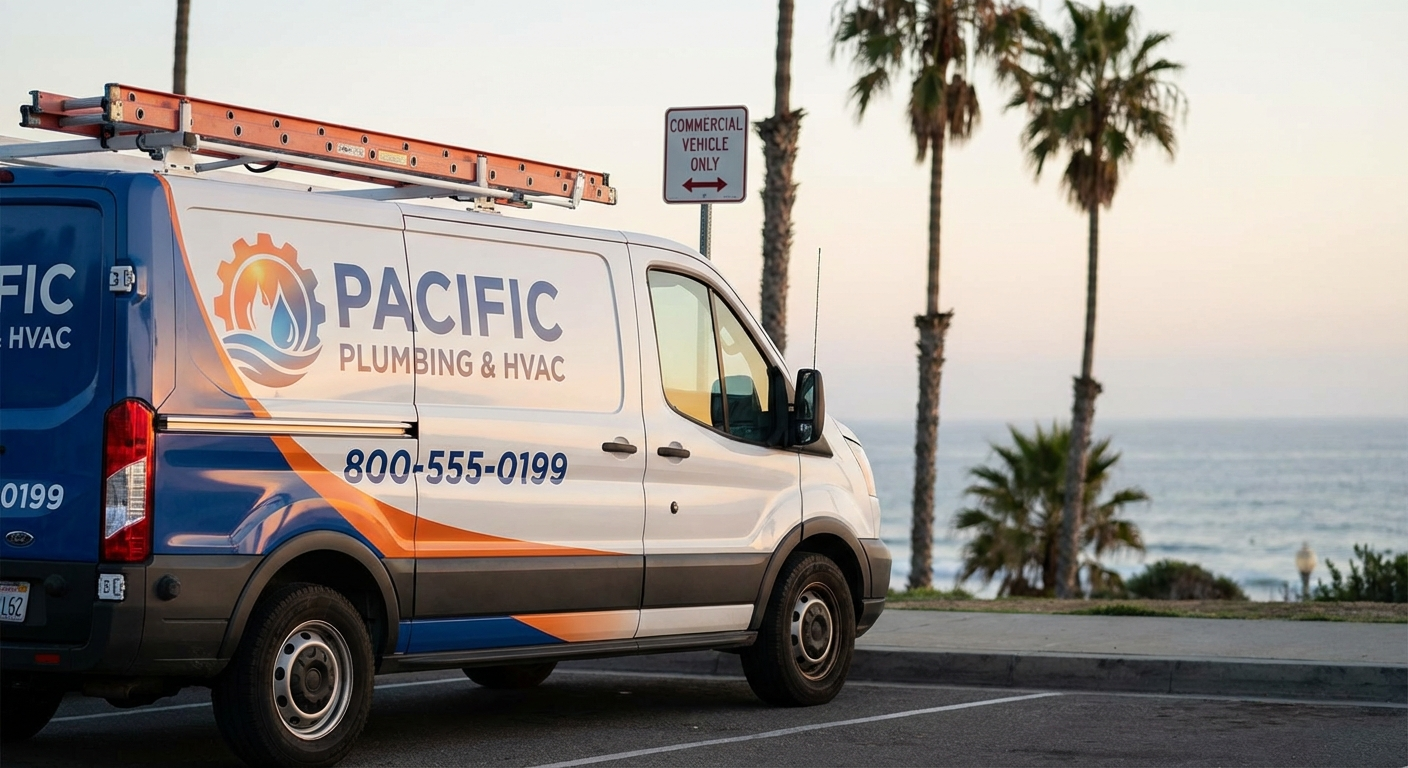
- Transporting equipment or tools: If your vehicle is essential for your trade, like a plumber’s van full of pipes or a landscaper’s truck with mowers, you need commercial coverage.
- Driving to job sites or client meetings: Even if you’re not carrying anything, if your vehicle is integral to your work, it’s often considered commercial. A real estate agent showing houses in Orange County, for example.
- Using your vehicle for sales or marketing: If your car is essentially a mobile billboard for your business.
- Employees driving company-owned vehicles: This is a no-brainer. Any vehicle titled under your business name needs commercial insurance.
There are some gray areas, sure. An occasional quick trip to the post office for your home-based Etsy shop? Probably not commercial. But here’s where it gets interesting: if that Etsy shop grows and you’re making daily trips to ship dozens of packages, suddenly the risk profile changes. That’s why it’s always best to talk to an expert. Karl Susman at Los Angeles Car Insurance Quotes, CA License #OB75129, has helped countless California business owners sort through these questions. You can call him at (877) 411-5200.
Step 2: Know Your Policy Types and Coverages
Once you know you need commercial coverage, understanding the different parts of a policy is next. It’s not just about meeting the state’s minimum requirements; it’s about protecting your business from potentially devastating financial losses.
California requires all drivers, including commercial ones, to carry minimum liability insurance. Right now, that’s $15,000 for injury/death to one person, $30,000 for injury/death to more than one person, and $5,000 for property damage. But wait — for commercial use, these limits are almost always too low. A single accident, especially involving multiple vehicles or injuries, could easily exceed these amounts, leaving your business assets exposed.
- Liability Coverage (Bodily Injury & Property Damage): This is the core. It pays for injuries to others and damage to their property if you’re at fault. For businesses, policies often start at $100,000/$300,000 for bodily injury and $50,000 or $100,000 for property damage. Many businesses opt for even higher limits, like $500,000 or even $1,000,000, especially if they operate in busy areas like downtown Los Angeles or carry valuable cargo.
- Collision Coverage: Pays for damage to your insured vehicle if it collides with another object or overturns, regardless of who’s at fault.
- Comprehensive Coverage: Covers damage to your vehicle from things other than collisions, like theft, vandalism, fire, or natural disasters. Think about the risk of wildfires in California; this coverage becomes even more important.
- Uninsured/Underinsured Motorist (UM/UIM): Pays for your medical expenses and property damage if an uninsured or underinsured driver hits you. Given California’s high number of uninsured drivers, this is a smart add-on.
- Medical Payments (MedPay): Covers medical expenses for you and your passengers, regardless of fault.
The Big Difference: Liability Limits
This is where commercial policies truly stand apart. Personal policies rarely offer the kind of high liability limits a business needs. If your delivery van causes a pile-up on the 101 Freeway, injuring several people and totaling a couple of expensive cars, the damages could easily run into hundreds of thousands, if not millions, of dollars. Your business needs protection against that kind of payout. Higher limits mean your business assets, your livelihood, are much safer. This brings up something most people miss: the potential for a lawsuit. A business with significant assets is a bigger target.
Also, remember Prop 103, passed way back in 1988? It impacts how insurers set rates and offers protections like good driver discounts. While commercial policies are different, the spirit of fair rating still applies. A clean driving record for your business drivers can make a real difference.
Step 3: What Drives Your Commercial Auto Premiums Up (and Down)
Just like personal auto insurance, many factors influence the cost of your commercial policy. But for businesses, there are a few extra layers.
- Vehicle Type: A heavy-duty dump truck will cost more to insure than a small sedan used for sales calls. Vans, box trucks, and specialized vehicles like cement mixers or tow trucks all have different risk profiles.
- Industry: A courier service making dozens of stops a day faces different risks than a consultant who drives to one client meeting a week. Construction, landscaping, food delivery, and transportation services often see higher rates due to increased risk of accidents, cargo theft, or vehicle wear and tear.
- Driver History: This is a big one. The driving records of everyone who operates your commercial vehicles will be scrutinized. Accidents, speeding tickets, or DUIs for any driver on your policy will push premiums up.
- Mileage and Radius of Operation: How far and how often do your vehicles travel? A regional delivery service covering all of Southern California, from Bakersfield to San Diego, will pay more than a local florist making deliveries only within their city.
- Claims History: If your business has a history of commercial auto claims, expect higher rates.
- Location: Operating in high-traffic, high-crime areas like downtown LA or parts of Oakland often means higher premiums due to increased accident and theft risks. Rural areas might see lower rates.
- Coverage Limits and Deductibles: Higher liability limits mean higher premiums. Choosing a higher deductible (the amount you pay out-of-pocket before insurance kicks in) can lower your premium, but you’ll need to be prepared to pay that amount if you have a claim.
- Fleet Size: Insuring multiple vehicles under one policy often comes with discounts compared to insuring each vehicle separately.
Step 4: Finding the Right Insurer in California
This isn’t like shopping for personal auto insurance where almost every major carrier offers a policy. Many well-known personal lines insurers—like State Farm, AAA, or Farmers—do offer commercial auto, but their appetite for certain business types or vehicle classes might be limited. They might only cover light commercial vehicles or specific industries.
Often, you’ll need to look at specialty commercial carriers. These companies are set up specifically to understand and price the unique risks of businesses. But how do you find them? That’s not the whole story.
This is where an independent insurance agent becomes invaluable. Someone like Karl Susman at Los Angeles Car Insurance Quotes works with multiple insurance companies, not just one. They can shop around for you, comparing quotes and coverages from various carriers to find the best fit for your specific business needs in California. They know which companies are strong in particular niches—say, a contractor in Riverside County or a food truck operator in Sacramento. It saves you a ton of time and, often, money.
Don’t just grab the first quote you see. A good agent will ask detailed questions about your operations, your vehicles, and your drivers to make sure you’re getting the right coverage, not just the cheapest. You can reach Los Angeles Car Insurance Quotes at (877) 411-5200.
Step 5: Getting Your Quote and What to Expect
Ready to get a quote? You’ll need to gather some information. The more detailed you are, the more accurate your quote will be.
- Vehicle Information: VINs, year, make, model, gross vehicle weight, and how each vehicle is used.
- Driver Information: Names, dates of birth, driver’s license numbers, and driving records (MVRs) for all employees who will operate company vehicles.
- Business Details: Your business type, industry, years in business, and your Federal Employer Identification Number (FEIN).
- Radius of Operation: How far do your vehicles typically travel from your primary business location? Local, regional, or long-haul?
- Coverage Needs: What liability limits are you looking for? Do you need cargo coverage, or non-owned auto coverage (for employees using their personal cars for business)?
Expect commercial auto rates to be higher than personal auto. That’s just the reality of the increased risk. The California insurance market has seen some turbulence recently, with some insurers pulling back or raising rates significantly due to factors like rising repair costs, natural disaster risks, and inflation. This means shopping around is more important than ever.
When you get your quotes, don’t just look at the bottom line. Compare the actual coverages. A lower premium might mean lower liability limits or higher deductibles. Make sure the policy truly protects your business.
Ready to get a quote? Visit losangelescarinsurancequotes.com/quote/ to start the process.
Step 6: Staying Compliant and Saving Money
Getting the policy is just the start. Managing it effectively can save you money and headaches down the road.
- Regular Policy Reviews: Your business changes. Your fleet changes. Your drivers change. Review your policy at least once a year with your agent to make sure it still fits your needs.
- Driver Training and Safety Programs: Investing in defensive driving courses for your employees can reduce accidents and, over time, lower your insurance costs.
- Telematics and Fleet Tracking: Some insurers offer discounts for vehicles equipped with telematics devices that monitor driving behavior. This can also help you manage your fleet more efficiently.
- Higher Deductibles: If your business has a healthy emergency fund, opting for a higher deductible can reduce your premium. Just be sure you can comfortably cover that amount if a claim arises.
- Bundling: Many insurers offer discounts if you bundle your commercial auto with other business insurance policies, like general liability or workers’ compensation.
FAQ: Your Commercial Auto Questions Answered
Do I need commercial auto if I just use my car for occasional business errands?
This is a common question. If it’s truly occasional—like once a month to drop off some paperwork—your personal policy might cover it, but it’s a gray area. If those “occasional” trips become more frequent, or if you’re carrying valuable business items, you’re better off with commercial coverage. Always check with your agent.
What if I only use my personal car for ride-sharing a few hours a week?
Many ride-sharing companies offer some level of coverage when you’re actively on a trip, but there are often gaps—especially between rides when you’re just waiting for a passenger. A personal auto policy almost certainly won’t cover you. Many insurers now offer “ride-share endorsements” that can bridge these gaps, but it’s a specific type of coverage you need to ask for.
Can I get a commercial policy for just one vehicle?
Absolutely. Many small businesses or independent contractors in California operate with just one vehicle. Commercial auto policies are available for single vehicles up to large fleets.
How does Prop 103 affect commercial auto rates?
Prop 103 mandates that insurance rates must be approved by the California Department of Insurance and prohibits insurers from setting rates based solely on zip codes. It also ensures good drivers get discounts. While commercial policies have different rating factors than personal ones, the principles of fair and transparent rating still apply. However, commercial risks are inherently different, and factors like the type of business, vehicle, and usage carry significant weight.
Protecting your California business means protecting its vehicles. Don’t leave it to chance. Get informed, get covered.
Ready to get a quote and talk specifics for your business? Visit losangelescarinsurancequotes.com/quote/.
This article is for informational purposes only and does not constitute financial advice.