
Understanding Your Auto Insurance in the Golden State
Picture this: you’re cruising down the 405, maybe heading to a beach day in Malibu, or perhaps crossing the Vincent Thomas Bridge in San Pedro. Suddenly, traffic screeches to a halt. A distracted driver rear-ends you. Or maybe you’re just parked on a quiet street in Pasadena, and a rogue shopping cart — or worse, a hit-and-run driver — dings your fender. What happens next? How do you pay for the damage? How do you cover medical bills if someone’s hurt? This is where your auto insurance steps in, especially here in California, where the roads are busy and the unexpected is, well, expected.
For many Californians, auto insurance feels like a mystery. You pay your premium, hope you never need it, and cross your fingers you’ve got enough coverage if you do. But knowing what your policy actually covers can save you a world of headache and a significant chunk of change down the line. Let’s break down the essential pieces of the auto insurance puzzle, California-style.
The Bare Minimum: California’s Required Coverage
Every driver in California needs to carry a certain amount of liability insurance. It’s the law. This isn’t about protecting *your* car or *your* injuries directly. Instead, it’s about protecting others if you’re at fault in an accident. Think of it as your financial safety net for the other guy.
Bodily Injury Liability
This part of your policy pays for medical expenses, lost wages, and pain and suffering for people injured in an accident where you’re found responsible. California sets minimum limits, often written as 15/30. That means your policy will pay up to $15,000 for injuries to one person and a maximum of $30,000 for all injuries in a single accident. Honestly, these minimums are pretty low. A single ambulance ride and a few hospital visits can blow past $15,000 in a heartbeat. You’ll often hear us at Los Angeles Car Insurance Quotes suggest much higher limits. You don’t want to be on the hook for tens or hundreds of thousands of dollars out of your own pocket.
Property Damage Liability
Here’s where your insurance covers damage to someone else’s property. This could be their car, a fence, a lamppost, or even a building. California’s minimum is $5,000. Sounds like a lot, right? But consider the cost of today’s vehicles. A fender bender involving a new Tesla or a luxury SUV in Orange County? That $5,000 can disappear quickly. Even a modest sedan’s bumper repair can run you a few thousand dollars. If you hit something expensive, and your damage liability is only $5,000, you’re paying the rest.

Beyond the Basics: Smart Choices for California Drivers
While liability coverage is mandatory, it’s just the start. Most drivers in California choose to add more protection. And for good reason. The costs of car repairs and medical care here can be staggering.
Uninsured/Underinsured Motorist (UM/UIM)
This is a big one for California. Despite the law, many drivers on our freeways – from the 101 to the 5 – are driving without insurance, or with just those tiny minimums. If one of *them* hits *you* and they’re at fault, who pays for your medical bills or your car repairs? UM/UIM steps in. Uninsured Motorist coverage pays when the at-fault driver has no insurance. Underinsured Motorist kicks in when they have some insurance, but not enough to cover all your damages. It’s an option you really shouldn’t skip. Think of the traffic in the Valley or the crowded streets of San Francisco; the odds of encountering someone without adequate coverage are higher than you might think.
Medical Payments (MedPay)
Accidents happen. And when they do, you or your passengers might get hurt. MedPay covers medical expenses for you and anyone in your car, regardless of who caused the accident. This can include ambulance fees, hospital visits, X-rays, and even funeral expenses. It’s usually a smaller amount, like $1,000 or $5,000, but it can be a lifesaver for those immediate bills before other health insurance or bodily injury claims kick in. It’s a nice layer of immediate protection.
Collision Coverage
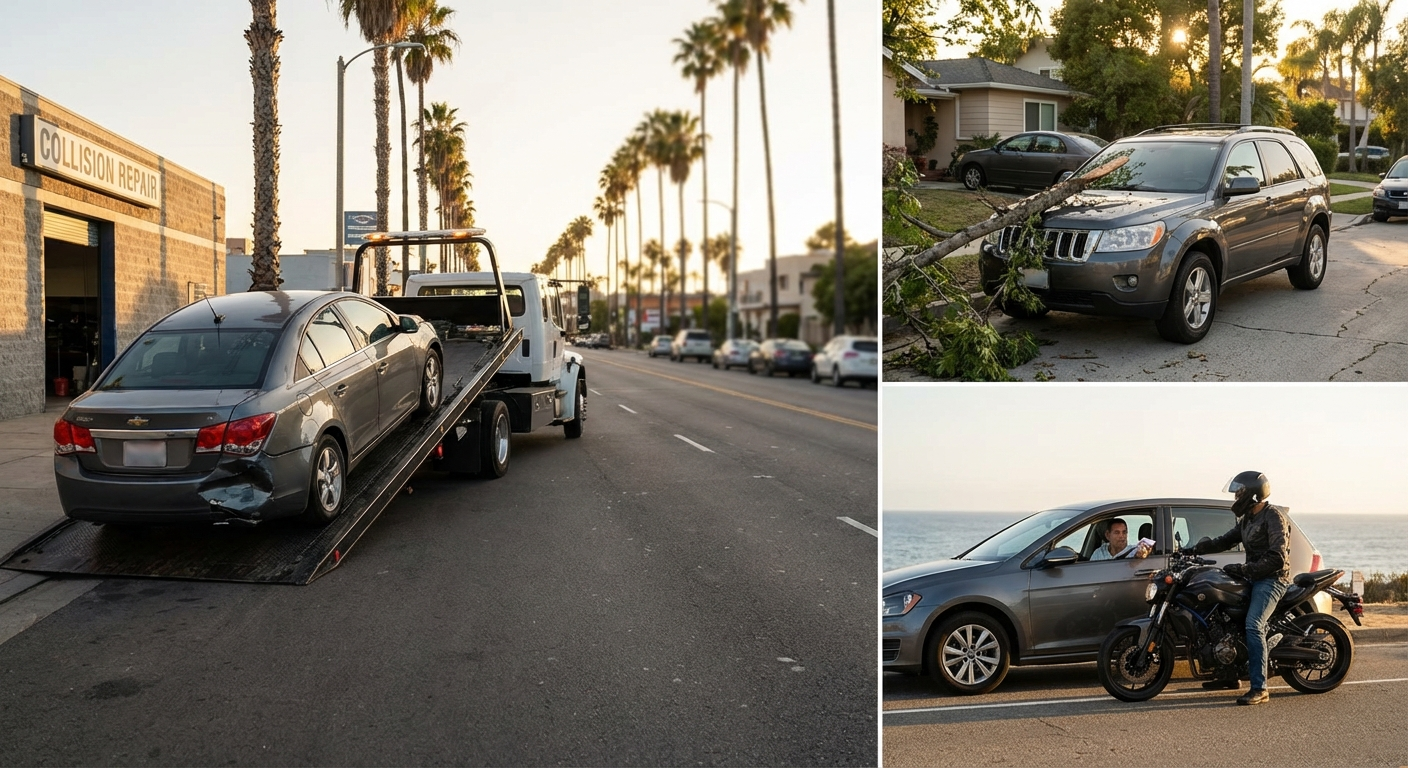
This is what pays to repair or replace *your* car if it’s damaged in an accident, no matter who’s at fault. If you hit a pole, another car, or even just back into your garage door in Ventura County, collision coverage takes care of it, minus your deductible. If you have a car loan or lease, your lender will almost certainly require you to carry collision coverage. It just makes sense for most drivers.
Comprehensive Coverage
Comprehensive coverage handles damage to your car that *isn’t* from a collision. Think of things like theft, vandalism, fire, hail, falling objects (like a tree branch during a storm), or hitting an animal. If a rogue deer jumps out in front of you on a foggy morning drive through the hills, comprehensive is your friend. This also typically covers glass damage, like a cracked windshield. Many lenders also require this, along with collision.
Roadside Assistance and Rental Car Reimbursement
These aren’t main coverage types, but they’re incredibly handy. Roadside assistance can help if you get a flat tire on the I-5, run out of gas, or need a tow. Rental car reimbursement covers the cost of a rental car while yours is being repaired after a covered accident. Life doesn’t stop just because your car does.
The California Context: What Makes It Different?
Driving here isn’t like driving in, say, rural Iowa. California has unique challenges. Our population density means more cars, more traffic, and unfortunately, more accidents. The cost of living and doing business here means repairs and medical care often cost more too. That’s why having solid coverage is so important.
The state also has specific regulations, like Prop 103, which gives the Insurance Commissioner power over rates. Still, we’ve seen significant premium increases across the state in recent years. Insurers like State Farm, AAA, and Farmers have adjusted rates as the cost of claims has gone up. It’s not just you; everyone’s feeling it.
Here’s where it gets interesting. Some drivers try to save money by getting only the bare minimum. But that’s a gamble. A serious accident could easily leave you financially ruined. It’s a balance between affordability and proper protection.
Finding the Right Fit for Your Ride
Choosing the right auto insurance isn’t a one-size-fits-all situation. Your daily commute from the Inland Empire to downtown LA is different from someone who only drives their classic car on weekends. Your car’s value, your driving record, where you live, and even where you park all play a role in what you need and what you pay.
It helps to talk to someone who understands the nuances of California insurance. Someone like Karl Susman at Los Angeles Car Insurance Quotes. We’ve been helping Californians get the right coverage for years. We don’t just sell policies; we explain them. You can reach us at (877) 411-5200.
Ready to see what options are available for you? Get a quote today and let’s find the coverage that fits your life: Get Your California Auto Insurance Quote.
Common Questions About California Auto Insurance
Q: Is auto insurance really mandatory in California?
A: Yes, absolutely. Driving without at least the state-mandated minimum liability insurance (15/30/5) is illegal. You could face fines, license suspension, and vehicle impoundment. Not worth the risk!
Q: What’s a deductible, and how does it work?
A: A deductible is the amount of money you agree to pay out of your own pocket before your insurance company starts to pay on a claim for collision or comprehensive coverage. For example, if you have a $500 deductible and your car sustains $2,000 in damage, you’d pay the first $500, and your insurer would pay the remaining $1,500.
Q: Will my rates go up if I file a claim?
A: Not always. If you’re not at fault in an accident, your rates might not increase. But if you are found at fault, or if you file multiple claims, especially for comprehensive damage like theft or vandalism, your premiums could go up at renewal time. Every situation is different, and insurers look at various factors.
Q: How can I save money on my California auto insurance?
A: Lots of ways! You can choose a higher deductible, ask about discounts for good driving, being a student, bundling policies (like home and auto), or driving a safer car. Your credit score can also play a role in California. The best way to find savings is to shop around and compare options. Karl Susman, CA License #OB75129, can help you look at different carriers and find potential discounts.
Understanding your auto insurance coverage isn’t just about following the law; it’s about protecting your financial future. It’s about peace of mind when you’re navigating those busy California roads. Don’t leave it to chance.
If you’re looking to understand your current policy better or explore new options, we’re here to help. Get an accurate, personalized quote for your California auto insurance right now: Get Your California Auto Insurance Quote.
This article is for informational purposes only and does not constitute financial advice.