Collision vs. “Other Than Collision” Coverage: Understanding Your California Car Insurance
Many drivers in California think “full coverage” means they’re protected against anything that could happen to their car. You’ve heard it, right? “Oh, I’ve got full coverage, so I’m good.” The short answer is yes, you’re better off than with just liability. The real answer is more complicated. What most people call “full coverage” actually boils down to two distinct types of protection for your vehicle: collision and what’s often called “other than collision” coverage — you might know it as “comprehensive.” These aren’t interchangeable. They cover very different scenarios, and understanding that difference can save you a ton of heartache and money, especially here in the Golden State.
What Collision Coverage Really Does
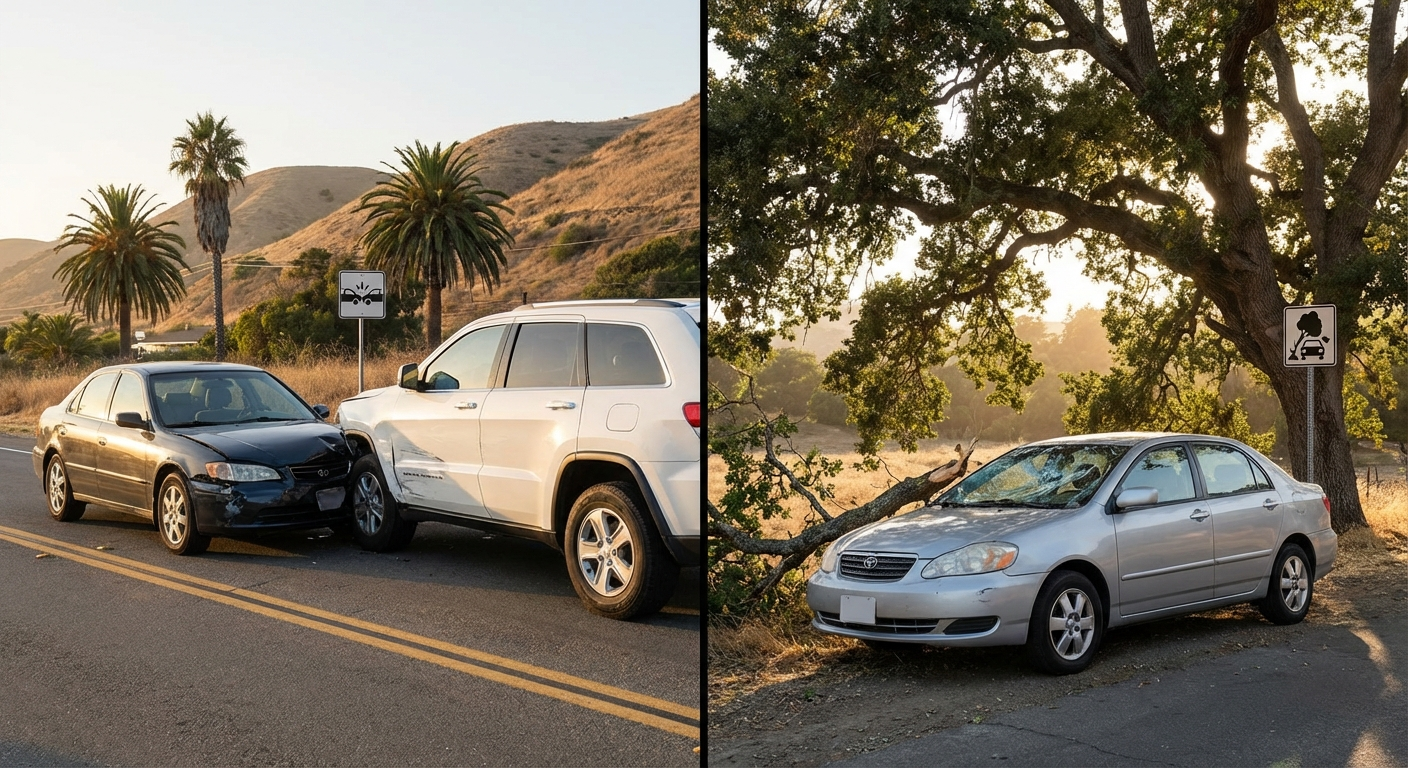
Picture this: you’re driving down the 101, maybe a little too close to the car in front, and suddenly traffic stops. *Wham!* You hit the car ahead. Or maybe you swerve to avoid a distracted driver and clip a light pole. That’s collision.
Collision coverage pays for damage to your own car when it hits another vehicle, an object, or when it rolls over. It doesn’t matter who was at fault. If you’re the one who caused the accident, your collision coverage kicks in to fix *your* car. If someone else hit you, their property damage liability should pay for your repairs. But if they’re uninsured or underinsured — a common problem in parts of the Inland Empire and the Valley — your collision coverage can still step up, often with your deductible.
Here’s the thing about collision: it’s typically the most expensive part of your physical damage coverage. Why? Because accidents happen. A lot. Especially in congested areas like downtown LA or on the freeways around Orange County. Insurers see the data, and it tells them the risk of you getting into a fender bender is pretty high.

“Other Than Collision” (AKA Comprehensive) — It’s Not Just for Theft
Now, let’s talk about “other than collision” coverage. This is the one many people still call “comprehensive,” and for good reason—it used to be its official name. But the newer term, “other than collision,” actually describes it better. This coverage protects your car from just about everything *else* that isn’t a collision.
Think about the unique risks we face in California. Wildfires, for starters. If embers from a blaze near Santa Clarita scorch your car while it’s parked, that’s “other than collision.” What if a tree falls on your car during one of those atmospheric river storms that drench Ventura County? Again, “other than collision.” Hail damage, flying rocks that crack your windshield, vandalism, theft – especially a problem in places like Oakland or parts of San Francisco – all fall under this umbrella. Even hitting an animal, like a deer on a rural highway, usually goes under “other than collision,” not collision.
This coverage is generally less expensive than collision. Why? Because while these events can be devastating, they tend to happen less frequently than car-on-car accidents. Still, the costs of fixing a car after a fire or a major theft can be astronomical, which is why having this protection is so important.
Myth: “Full Coverage” Means No Deductible
Lots of folks believe that if they have “full coverage,” they’ll never pay a dime out of pocket. That’s just not true. Both collision and other than collision policies come with a deductible. That’s the amount you agree to pay first before your insurance company starts paying.
For instance, if you have a $500 collision deductible and you get into an accident that causes $3,000 worth of damage to your car, you’ll pay the first $500, and your insurer will pay the remaining $2,500. Deductibles for “other than collision” coverage work the same way. Sometimes, you can even have a lower deductible for “other than collision” than for collision, especially for things like glass repair.
Choosing your deductible is a balancing act. A higher deductible means a lower premium, but you’ll pay more if you have a claim. A lower deductible means a higher premium, but less out of your pocket later. It’s a personal choice, and one Karl Susman at Los Angeles Car Insurance Quotes, CA License #OB75129, often discusses with clients.
Is It Worth It for an Older Car?
This is a classic question. Your 2008 Honda Civic might still run like a champ, but is it worth paying for collision and “other than collision” coverage?
Honestly, it depends on the car’s actual cash value and your financial situation. If your car is only worth $3,000, and you have a $1,000 deductible, your insurance company might only pay out $2,000 if it’s totaled. Is paying, say, $500-$800 a year for that coverage really saving you money in the long run? Maybe not.
Many people choose to drop physical damage coverage on older, lower-value vehicles and instead save that premium money to put towards a new car if something happens. But here’s the kicker: even an older car can still be stolen, or suffer fire damage. So, while you might ditch collision, keeping “other than collision” coverage for an older vehicle often makes sense. It’s usually much cheaper, and the risks it covers – theft, vandalism, natural disasters – don’t care about your car’s age.
California’s Unique Risks: Why This Matters Here
Living in California means dealing with certain realities. We’ve talked about wildfires. The state has seen premiums jump 40% between 2022 and 2024 for some drivers, partly due to the rising cost of repairs and the frequency of natural disasters. If your car is damaged in a massive wildfire like those we’ve seen near Malibu or in the Sierra foothills, your “other than collision” coverage is what saves you.
Then there’s theft. Car theft rates can be stubbornly high in certain metro areas. If your car disappears from a parking garage in downtown San Diego or gets stripped in a neighborhood in Stockton, you’ll be leaning on your “other than collision” policy.
And let’s not forget the sheer number of vehicles on the road. More cars mean more chances for collisions. That’s just math. Insurers like State Farm, AAA, and Farmers are constantly adjusting their rates based on these local conditions.
What If I Lease or Finance My Car?
If you have a car loan or a lease, your lender almost certainly requires you to carry both collision and “other than collision” coverage. They want to protect their investment, and your car is collateral. You won’t have a choice in this matter. Dropping these coverages could violate your loan agreement and put you in a tough spot with your bank.
Even if your car is paid off, the peace of mind these coverages offer is often worth the cost. Imagine your car gets totaled in an accident or is completely destroyed in a fire. Could you afford to replace it out of pocket? For many Californians, that’s a hard no.
Does Filing a Claim Always Raise My Rates?
Not always. It depends on the type of claim and who was at fault. If you get into an accident and it’s clearly your fault, expect your collision claim to impact your premiums. That’s standard.
But what about an “other than collision” claim? Say a tree branch falls on your car during a storm, or your windshield gets cracked by a rock on the freeway. These “acts of God” or non-fault incidents are generally treated differently. Often, an “other than collision” claim won’t impact your rates as much, if at all, compared to an at-fault collision claim. Which brings up something most people miss: having a lower deductible on your “other than collision” coverage can be a smart move, especially for common issues like windshield damage.
It’s all about risk assessment for the insurance companies, and they see weather damage or hitting a deer as less indicative of your driving habits than, say, rear-ending someone on the 405.
Finding the Right Balance for Your Budget
Choosing the right amount of collision and “other than collision” coverage isn’t a one-size-fits-all deal. Your car’s value, your driving habits, where you live, and your financial comfort level all play a part. You might decide to keep a high deductible on collision but a low one on “other than collision.” Or perhaps, if your car is older, you drop collision entirely but keep the other.
Every situation is unique. That’s why talking to an experienced agent like Karl Susman at Los Angeles Car Insurance Quotes, CA License #OB75129, can make a huge difference. He can walk you through the specifics of what each policy covers, what your options are, and help you find a plan that makes sense for your life in California.
Ready to see what options are out there for you? Don’t guess about your coverage. Get a personalized quote today and understand exactly what you’re paying for. Visit https://susmaninsurance.com/get-a-quote/.
Frequently Asked Questions
Can I have “other than collision” coverage without collision coverage?
Yes, you absolutely can. Many people choose to do this for older cars that might not be worth much in a collision, but they still want protection against theft, fire, or vandalism. It’s a way to save money on premiums while still covering some significant risks.
What’s the difference between a total loss and a partial loss?
A partial loss means your car can be repaired, and the cost of repairs is less than the car’s actual cash value. A total loss means the damage is so severe that the cost to repair it exceeds a certain percentage (often 70-80%) of the car’s actual cash value, or it’s simply irreparable. In a total loss scenario, your insurer pays you the car’s value, minus your deductible.
Will my credit score affect my “other than collision” or collision rates?
In California, insurers are generally prohibited from using your credit score to determine your auto insurance rates. This is due to Proposition 103, which limits how insurance companies can use certain factors. Instead, they primarily look at your driving record, years of driving experience, and where you live.
What happens if I hit a pothole and damage my car? Is that collision?
Hitting a pothole is usually considered a collision claim because your car is colliding with an object (the ground/pothole). However, some insurers might have specific clauses or handle it differently. It’s always best to check your specific policy or ask your agent.
If my car is stolen, does my “other than collision” coverage pay for a rental car?
“Other than collision” coverage pays for the actual loss of your vehicle due to theft. Whether a rental car is covered while your car is missing or being recovered depends on if you’ve purchased “rental reimbursement” or “loss of use” coverage as an add-on to your policy. It’s not automatically included with basic “other than collision.”
Think you might be paying too much or not getting the right protection? It’s easy to find out. Get a personalized assessment for your California car insurance. Visit https://susmaninsurance.com/get-a-quote/.
This article is for informational purposes only and does not constitute financial advice.