What you’ll learn:
- Why your California city directly impacts what you pay for car insurance.
- How state rules like Prop 103 shape the entire market.
- Other key factors that push your rates up or pull them down.
- Tips to find better pricing, no matter where you live in California.
- Why an independent agent can be your best ally.
Understanding California’s Car Insurance Puzzle, City by City
Ever wonder why your friend in Sacramento pays less for car insurance than you do in Santa Monica, even if you drive similar cars and have clean records? It’s not just bad luck. California car insurance costs vary wildly from one city to the next. The short answer is yes, your address is a huge factor. The real answer is more complicated, tied to a web of local risks, state regulations, and how insurers see your neighborhood.
Step 1: Why Your Zip Code Is a Big Deal to Insurers
Think about it: car insurance is all about risk. Insurers are trying to guess how likely you are to file a claim. Where you park your car, where you drive it, and what happens on the roads around you — that all feeds into their calculations. So, your city isn’t just a label; it’s a data point.
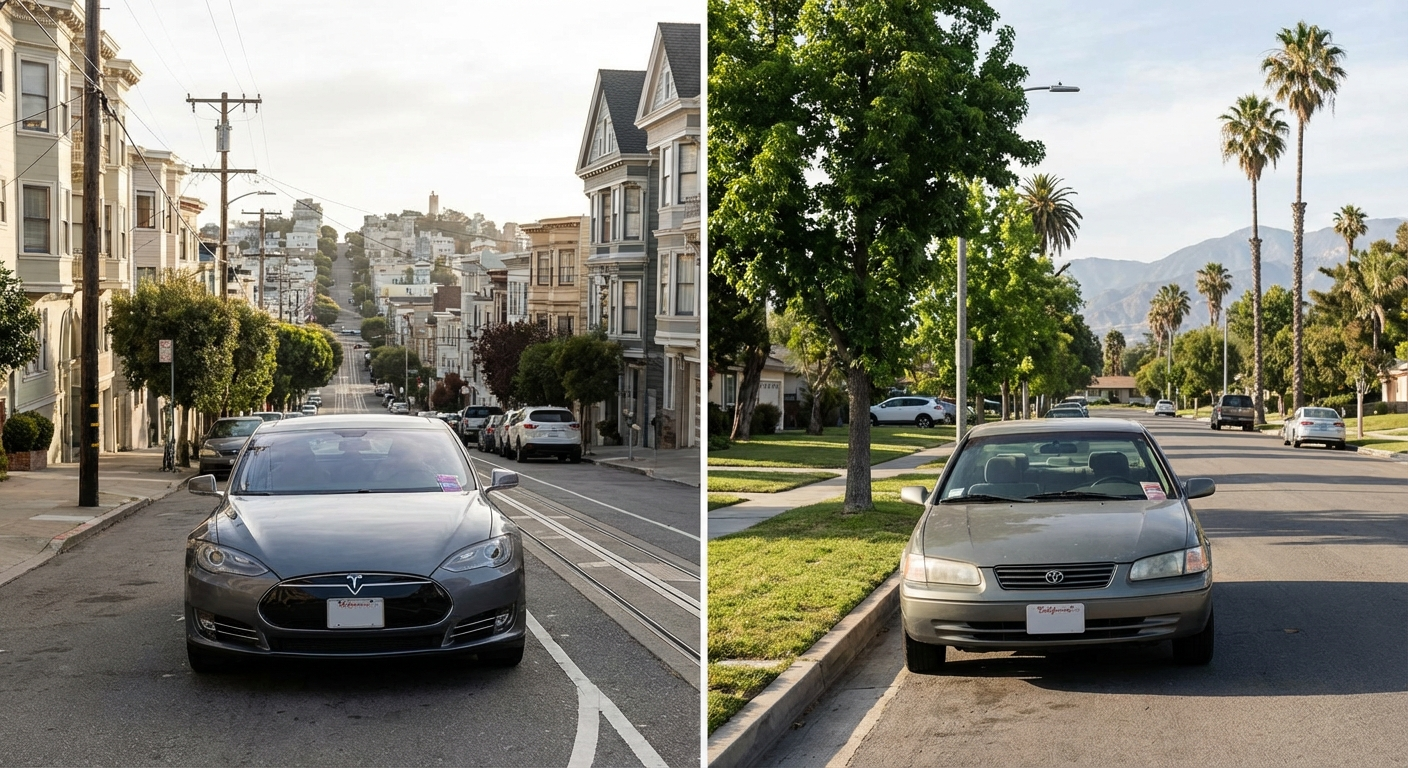
- Traffic Density: More cars on the road mean more chances for accidents. Downtown Los Angeles, San Francisco, or even busy stretches of the 405 in the Valley see far more fender benders than, say, a quiet street in Ojai.
- Theft Rates: Some cities just have higher rates of car theft or break-ins. If you live in an area known for these issues, your comprehensive coverage will likely cost more. Insurers track these statistics down to specific neighborhoods.
- Accident Frequency: Beyond just traffic, some intersections or areas are simply more prone to accidents. Maybe it’s poor road design, bad lighting, or just aggressive drivers. Insurers know these spots.
- Population Density: More people usually means more cars, more traffic, and a higher likelihood of incidents. Densely populated urban centers almost always have higher rates than sprawling suburbs or rural towns.
- Local Weather and Hazards: This might seem less obvious for car insurance, but think about it. Areas prone to wildfires — like parts of Ventura County or the foothills surrounding the Inland Empire — can see vehicles damaged by smoke or falling ash, even if not directly in the fire’s path. While not a primary driver like theft, it’s part of the broader risk picture.
Honestly, insurers use incredibly detailed maps. They don’t just look at “Los Angeles”; they look at individual zip codes, sometimes even blocks, to fine-tune their pricing models.

Step 2: How California’s Unique Rules Shape the Market
California isn’t like other states when it comes to insurance. We have a few rules that really make a difference.
Prop 103 and Its Impact
Back in 1988, California voters passed Proposition 103. This law changed everything. It requires insurers to get approval from the state’s Insurance Commissioner before they can raise rates. It also made “good driver” discounts mandatory and limited how much insurers could use things like a driver’s credit score (they can’t use it at all for pricing auto insurance in CA, which is different from many other states).
This means insurers can’t just hike prices whenever they want. They have to justify it. But here’s the thing: sometimes, this makes it harder for them to keep up with rising costs. Between 2022 and 2024, many insurers saw their costs jump significantly due to inflation in repair parts, labor, and medical expenses from accidents. That’s not the whole story. The slow approval process for rate increases has led some big names, like State Farm and AAA, to pull back from writing new policies in certain areas or even entirely, making it harder for some Californians to find coverage.
Which brings up something most people miss. When fewer companies are offering insurance, competition shrinks. That can lead to higher prices for everyone still in the market.
The FAIR Plan (and Why It Matters Even for Auto)
While the California FAIR Plan is primarily for property insurance in high-risk fire areas, its existence highlights the broader challenges insurers face in California. If insurers are hesitant to write homeowner policies in areas like the Santa Monica Mountains due to wildfire risk, it can sometimes ripple into their overall strategy for that region, including auto insurance. They see the area as generally higher risk. A potential 2025 fire season in the hills above LA isn’t just a property concern; it reflects a broader risk profile for the region.
Step 3: Beyond Location – Your Personal Profile and Vehicle
Even if you live in a “high-cost” city, there are still many other things that determine your premium. Your address is just one piece of the puzzle.
- Your Driving Record: This is huge. A clean record with no accidents or tickets will save you a lot of money. A single at-fault accident can jump your premiums by 20-40% for years.
- Your Age and Experience: Younger, less experienced drivers typically pay more. As you get older and gain more driving experience, your rates usually drop – assuming you keep a clean record.
- Your Vehicle: What you drive matters. A brand-new luxury SUV costs more to insure than an older, more basic sedan. Why? Because repairs are more expensive, and some models are more attractive to thieves. Also, cars with higher safety ratings might qualify for discounts.
- Your Coverage Choices: This is where you have a lot of control.
- Liability Limits: California requires minimum liability coverage, but most people opt for higher limits to protect their assets. More coverage means a higher premium.
- Deductibles: Your deductible is what you pay out-of-pocket before your insurance kicks in. A higher deductible (e.g., $1,000 instead of $500) usually means a lower premium.
- Optional Coverages: Things like rental car reimbursement, roadside assistance, or uninsured motorist coverage add to your cost but offer extra protection.
- How Much You Drive: If you commute 50 miles a day, you’re on the road more, increasing your risk. Low-mileage drivers might qualify for discounts.
Step 4: Hot Spots vs. Cooler Zones – A General Look
While we can’t give exact numbers, we can talk about general trends. Insurers group areas by risk. Some cities consistently fall into higher-cost tiers.
- Typically Higher Cost Areas:
- Major Urban Centers: Los Angeles (especially downtown, Hollywood, and denser neighborhoods), San Francisco, Oakland, parts of San Jose. These cities have high population density, heavy traffic, and often higher theft rates.
- Coastal Cities: Santa Monica, Long Beach, and other densely packed coastal areas often see higher rates due to traffic and sometimes higher vehicle values.
- Typically Lower Cost Areas:
- More Rural or Less Densely Populated Regions: Cities in the Central Valley like Bakersfield or Fresno, or smaller towns in the Sierra foothills, often have lower rates. Less traffic, fewer accidents, generally lower theft.
- Suburban Sprawl: Some parts of the Inland Empire (think Riverside, San Bernardino) might be lower than coastal LA, but still higher than truly rural spots, depending on specific neighborhoods and traffic patterns.
- Certain Northern California Regions: Areas north of Sacramento, away from the immediate Bay Area, can also see more favorable rates.
But wait — this isn’t a hard and fast rule. A safe driver in a “high-cost” city might still pay less than a risky driver in a “low-cost” town. It’s all about the combination of factors.
Step 5: Your Roadmap to Finding Better Rates
No matter where you live in California, you’ve got options to try and lower your car insurance bill.
- Shop Around, Always: This is the golden rule. Insurers use different formulas. What one company charges for your risk profile in your city might be wildly different from another. Don’t just stick with the first quote you get or renew automatically.
- Ask About Discounts: You’d be surprised how many discounts are out there.
- Bundling: Combine your auto and home/renters insurance with the same company.
- Multi-Car: Insure more than one vehicle.
- Good Student: If you have a young driver on your policy with good grades.
- Defensive Driving Course: Some insurers offer discounts for completing approved courses.
- Low Mileage: If you don’t drive much.
- Telematics/Usage-Based: Let the insurer track your driving habits (safe drivers get discounts).
- Anti-Theft Devices: Alarms or tracking systems.
- Adjust Your Coverage: Revisit your deductibles and optional coverages. If your car is older and paid off, you might consider dropping collision and comprehensive coverage entirely, or at least raising your deductibles significantly.
- Maintain a Clean Driving Record: This truly is the most effective long-term strategy. Avoid tickets and accidents.
- Consider Your Vehicle Choice: When buying a new car, research its insurance costs beforehand. Some cars are simply cheaper to insure.
Step 6: The Independent Agent Advantage in California
Trying to compare quotes from a dozen different companies can be a real headache. Each one asks the same questions, and you have to remember all your answers. This is where an independent insurance agent like Karl Susman comes in.
Independent agents don’t work for just one insurance company. They work with many different insurers. That means they can shop around for you, comparing rates and coverages from multiple carriers at once. They know the California market, they understand Prop 103, and they know which insurers are currently offering competitive rates in specific cities – whether you’re in Fresno, San Diego, or the thick of it in downtown LA.
They can also explain the nuances of different policies and help you decide on the right coverage limits for your situation. Think of them as your personal guide through the insurance maze. Karl Susman and the team at Los Angeles Car Insurance Quotes, CA License #OB75129, have been helping Californians with this exact challenge for years. They can be reached at (877) 411-5200.
Ready to see what your options are? It only takes a few minutes to get a quote and potentially save some money.
Frequently Asked Questions About California Car Insurance by City
Q1: Can my credit score affect my car insurance rates in California?
No, not directly for pricing your auto insurance. California is one of the few states where insurers are prohibited from using your credit score to determine your auto insurance premiums. They rely more heavily on your driving record, vehicle, and location.
Q2: If I move cities within California, will my rates change immediately?
Yes, almost certainly. You’re required to inform your insurer when you move. Because your new address carries a different risk profile – whether higher or lower – your premium will be adjusted accordingly. Make sure to update your address promptly to ensure your coverage remains valid.
Q3: Why are some insurers pulling back from writing new policies in California?
Several factors are at play. Rising costs for vehicle repairs, medical care after accidents, and a slower-than-desired rate approval process from the state’s Insurance Commissioner mean some insurers feel they can’t charge enough to cover their risks. This leads them to limit new business, especially in areas they deem higher risk.
Q4: Does having a garage instead of street parking make a difference?
It can. Insurers often ask about where your vehicle is typically parked overnight. If you consistently park in a secure garage, especially one that’s locked, it can sometimes lead to a small discount compared to street parking, as it reduces the risk of theft or vandalism.
Don’t let the complexities of California’s insurance market leave you overpaying. Take control of your costs today. Click here to get a personalized car insurance quote.
***
This article is for informational purposes only and does not constitute financial advice.