
Starting out as a driver in California? It’s exciting, sure. But it can also feel like you’re trying to untangle a spaghetti Western plot just to figure out car insurance. Don’t sweat it. Getting behind the wheel means you’ll need insurance, and the rules here in the Golden State are a bit specific. This guide will walk you through everything you need to know, from the absolute minimum requirements to smart choices that’ll protect your wallet – and your peace of mind.
What You’ll Learn:
- California’s mandatory car insurance limits for new drivers.
- What makes someone a “new driver” in the eyes of insurers.
- The documents you’ll need to get your first policy.
- Coverage options beyond the legal minimums and why they matter.
- Factors that seriously impact your insurance rates in California.
- How to shop for the best policy and get expert help.
Step 1: First Things First — California’s Mandatory Minimums
Here’s the deal: you can’t legally drive in California without car insurance. Period. It’s not just a good idea; it’s the law. The state wants to make sure that if you cause an accident, there’s money to cover the damages you inflict on others. This legal requirement is often called “liability insurance.”
California, thanks in part to consumer protections like Proposition 103 from way back in 1988, sets specific minimum coverage amounts. You’ll hear these numbers as a series of three: 15/30/5. What do they mean?
- $15,000 for bodily injury liability per person.
- $30,000 for total bodily injury liability per accident.
- $5,000 for property damage liability per accident.
So, if you hit another car, that $5,000 for property damage might sound like a lot. But here’s the thing: ever seen the cost of repairing a newer Honda Civic or a Tesla? Five thousand dollars often doesn’t even cover a bumper and a headlight. That’s not the whole story. If you total a car, or even cause significant damage, you could be on the hook for tens of thousands of dollars out of your own pocket if you only carry the minimum. Most people find that a little scary.
Which brings up something most people miss. These minimums are designed to protect *other people* and their property from *your* mistakes. They won’t pay a dime for your car’s repairs if you’re at fault, and they won’t cover your medical bills either. Keep that in mind as we move through what else you might want.
Step 2: Who Exactly is a “New Driver” Here?
When an insurance company talks about a “new driver,” they’re not just thinking about teenagers. Sure, a 16-year-old who just got their license is the classic example. But it could also be a 30-year-old who just moved to California from another country and is getting their first U.S. license. Or maybe someone who hasn’t driven in years and is starting fresh. It’s really about lack of recent, verifiable driving history in the eyes of an insurer.
Why does this matter? Well, insurance companies price risk. Someone with years of clean driving history in Ventura County, for instance, looks less risky than a brand-new driver in a busy part of Los Angeles. New drivers, by definition, don’t have that proven track record. This lack of history often translates to higher premiums. It’s not personal; it’s just how the math works for them.
Step 3: Getting Your First Policy — What You’ll Need
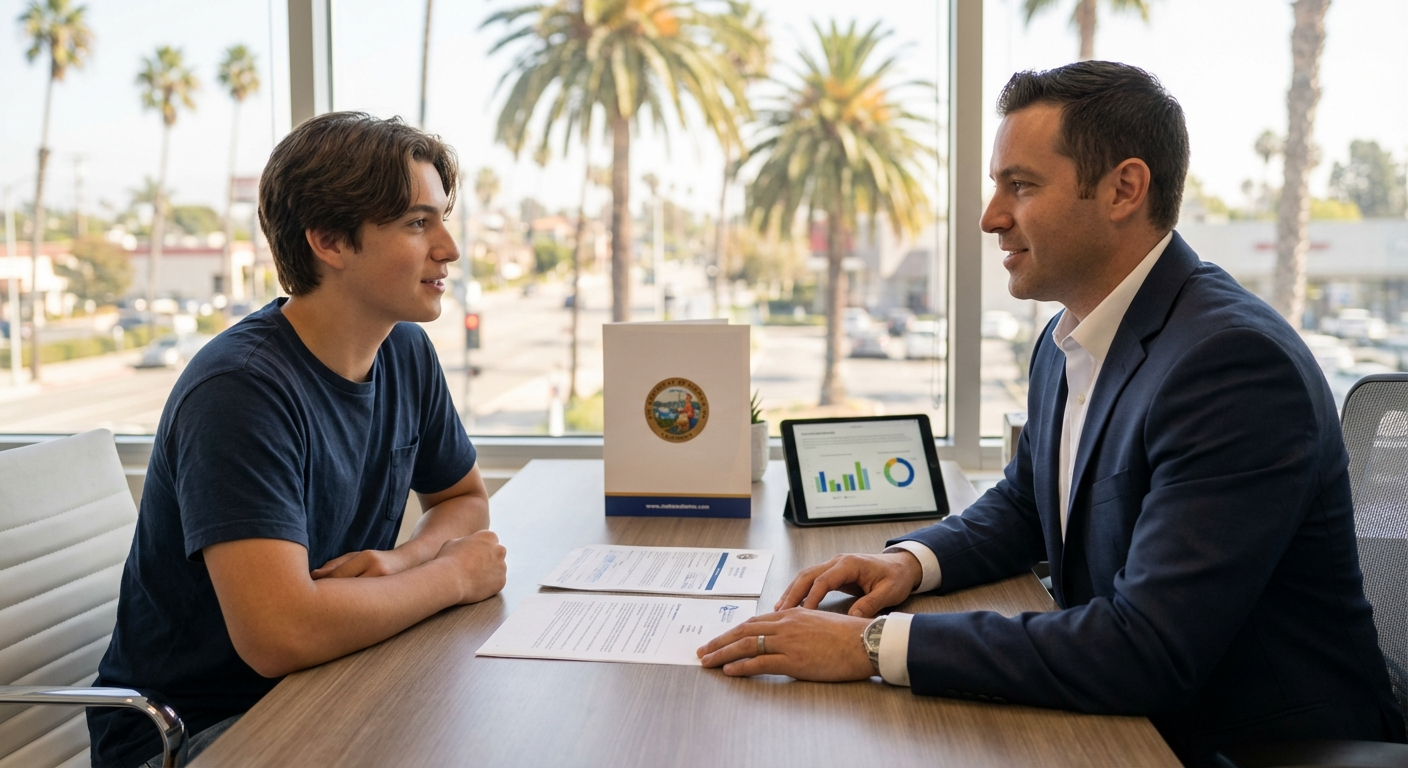
Ready to get insured? You’ll need a few key pieces of information to make the process smooth. Don’t worry, it’s pretty standard stuff:
- Your California Driver’s License: Obviously. You can’t get insurance without one. If you’re still on a provisional license, that’s fine, but the insurer will know your age.
- Vehicle Information: This means the make, model, year, and Vehicle Identification Number (VIN) of the car you’ll be driving. The VIN is usually on the dashboard near the windshield or on the driver’s side door jamb.
- Vehicle Registration: Proof that the car is legally registered in California.
- Your Address: Where the car will be primarily garaged. This matters a lot for rates. Someone in the quiet suburbs of Orange County often pays less than someone in a dense urban area like downtown San Francisco or even parts of the Inland Empire.
When you’re shopping around, you’ll find big names like State Farm, AAA, Farmers, and Geico all competing for your business. It’s smart to get quotes from several of them. Each company has its own way of calculating risk, so prices can vary wildly, even for the same coverage.
Step 4: Beyond the Bare Minimum — Smart Coverage Choices
Remember how California’s minimums only cover the other guy? For most new drivers, that’s just not enough. Think about it: you’ve just invested in a car, maybe a used one, but it’s still *your* car. If you cause an accident, you’ll want to fix it, right? And what if you get hurt?
Here are some coverages you’ll definitely want to consider:
Collision Coverage
This pays for damage to *your* car if you hit another vehicle or object, or if your car rolls over. It applies even if you’re at fault. If you have a car loan, your lender will almost certainly require you to carry collision insurance. Even if you own your car outright, it’s usually a smart move. Repair costs, especially for newer cars with complex sensors and tech, can add up fast.
Comprehensive Coverage
This covers damage to your car that isn’t from a collision. Think about things like theft, vandalism, fire (a big concern in parts of California prone to wildfires, like areas near the 2025 LA fires), falling objects, or even hitting an animal. If you have a car loan, this is also usually mandatory. For anyone else, it’s a good idea, especially if you live in an area with higher crime rates or natural disaster risks.
Uninsured/Underinsured Motorist (UM/UIM) Coverage
This is a big one in California. Despite the law, many drivers are still on the road without insurance, or with only the bare minimums. If one of *those* drivers hits you and they’re at fault, your UM/UIM coverage steps in to pay for your medical bills and car repairs. It’s like a safety net for when other people don’t play by the rules. Honestly, this coverage feels like a must-have in a state with so many drivers.
Medical Payments (MedPay)
This coverage pays for medical expenses for you and your passengers, regardless of who was at fault in an accident. It’s a quick way to get medical bills paid without waiting for fault to be determined. It can be a nice complement to your health insurance, covering deductibles or co-pays.
Step 5: How California Rates New Drivers (and What Drives the Cost)
Okay, so you know what coverage you need. But how much will it actually cost? This is where things can get a little frustrating for new drivers. Premiums jumped, on average, something like 40% between 2022 and 2024 across California, and new drivers often feel that pinch even more.
Insurers look at several factors:
- Age: Younger drivers, especially those under 25, statistically have more accidents. It’s just a fact insurers use to set rates.
- Driving Record: Or, in your case, the lack of one. No history means no proof of safe driving.
- Vehicle Type: A flashy sports car or an expensive luxury SUV will cost more to insure than an older, reliable sedan. Why? They’re more likely to be stolen, cost more to repair, and sometimes, they encourage faster driving.
- Location: Where you live and park your car makes a huge difference. High-crime areas, or places with heavy traffic and more accidents (think parts of the Valley or downtown San Diego), often mean higher premiums.
- Annual Mileage: How much you drive. The more time you spend on the road, the higher your risk of an accident.
- Good Student Discounts: If you’re a student with good grades, many insurers offer a discount. It’s a nice perk.
- Driver Training: Completing an approved driver education course can sometimes earn you a discount.
The short answer is yes, new drivers pay more. The real answer is more complicated, because even within the “new driver” category, your specific circumstances — your car, where you live, your grades — can shift the numbers quite a bit.
Step 6: Navigating the DMV & SR-22s (If Applicable)
Once you have insurance, your insurer will notify the California DMV. This is how the state knows you’re complying with the law. You should always carry proof of insurance in your car, either a physical card or digital proof on your phone.
Now, a quick word on SR-22s. Hopefully, you’ll never need one. An SR-22 is a certificate of financial responsibility that some drivers are required to file with the DMV. It’s usually for serious driving infractions — things like DUIs, driving without insurance and getting into an accident, or accumulating too many points on your license. If you’re a new driver and unfortunately find yourself in one of these situations, getting insurance will become even harder and much more expensive. The insurer essentially tells the state, “Yes, we’re covering this person.” It’s a big deal, and it’s something you definitely want to avoid.
Step 7: Finding the Right Policy (and the Right Help)
With all these options and factors, how do you find the best policy without pulling your hair out? Don’t just pick the first quote you see. Shopping around is key. You can get quotes online, but sometimes, especially as a new driver, talking to a real person makes a huge difference.
That’s where an independent insurance agent comes in. Someone like Karl Susman at Los Angeles Car Insurance Quotes (CA License #0B75129) can look at your unique situation and compare policies from many different companies. They know the California market inside and out – the quirks, the discounts, and which insurers are generally more forgiving to new drivers. They can help you understand the fine print and make sure you’re getting the right coverage, not just the cheapest. You can reach Karl at (877) 411-5200 for a chat.
Finding the right insurance isn’t just about ticking a box. It’s about protecting yourself, your passengers, and your financial future. Take your time, ask questions, and don’t be afraid to seek expert advice.
Ready to get some quotes and see what your options look like? Don’t wait. Click here to get started with a personalized quote today!
Frequently Asked Questions
Q: Can I drive a car in California if I’m a new driver and not on the owner’s policy?
Generally, no. If you live in the same household as the car owner and regularly drive their car, you’ll need to be listed on their policy. If you’re just borrowing a friend’s car occasionally, their policy usually extends to you, but there are limits. Always check with the policyholder’s insurance company first. Don’t risk it.
Q: What happens if I get pulled over without insurance in California?
You’ll face fines, and your car could even be impounded. The fines can be hundreds of dollars for a first offense, and they go up significantly for repeat offenses. Plus, you might get points on your driving record, which makes future insurance even more expensive. It’s just not worth the gamble.
Q: Are there special rules for provisional drivers (under 18) in California?
Yes. Provisional drivers have restrictions on driving unsupervised at night (11 PM to 5 AM) and carrying passengers under 20 years old for the first 12 months, or until they turn 18. Insurance companies are well aware of these rules and factor them into rates. Adhering to these restrictions is important, not just for safety, but for keeping your driving record clean.
Q: How can I lower my insurance rates as a new driver?
Good question! Keep a clean driving record – no tickets, no accidents. Take a defensive driving course. Look for good student discounts if you’re eligible. Drive a safer, less expensive car. And always, always shop around for quotes, perhaps with the help of an independent agent like Karl Susman at Los Angeles Car Insurance Quotes. He can often find deals you didn’t even know existed. You can call him at (877) 411-5200.
Ready to find the right coverage that fits your needs and budget? Get a free car insurance quote now and take the first step towards smarter driving in California!
This article is for informational purposes only and does not constitute financial advice.