Driving Less in California? You Might Save a Bundle on Auto Insurance
Maria and David, up in Ventura County, have seen some changes over the last few years. David retired from his accounting job in Oxnard, and Maria’s photography business went mostly remote after 2020. Suddenly, their trusty Honda CR-V, once a daily commuter, mostly sat in the driveway. A trip to the grocery store, maybe a weekend drive down to Santa Monica to see the grandkids – that was about it. They kept paying their auto insurance premium, month after month, just like always. But David started wondering. Was he really paying the right amount for a car that barely saw the 101 Freeway anymore? He had a hunch they might be missing something.
Honestly, a lot of Californians are in David’s shoes right now. Life shifts. Maybe you’re working from home more, or you’ve decided to ditch the long commute for public transit, or perhaps your second car is now just for Sunday drives. If your wheels aren’t racking up thousands of miles each year, you’re likely paying too much for your auto insurance. Here’s where it gets interesting. California, with its unique insurance rules and infamous traffic, actually offers a significant opportunity for drivers who keep their mileage low: the low mileage discount.
Why Your Odometer Reading Matters to Insurers
Think about it from an insurance company’s perspective. What’s their biggest risk? Accidents. And what increases the likelihood of an accident? Time spent on the road. It’s a pretty straightforward equation, really. The more you drive, the higher the chance you’ll be involved in a fender bender on the 405, or get caught in one of those sudden downpours that turn the Bay Area freeways into a slip-and-slide. Less time behind the wheel means less exposure to those risks.
That’s why mileage has always been a key factor in calculating your premium here in California. It’s not just some random number insurers pull out of thin air. It’s a direct measure of your risk profile. Proposition 103, passed back in 1988, solidified this. It mandated that auto insurance rates be based primarily on three factors: your driving record, the number of miles you drive annually, and your years of driving experience. Notice that mileage is right there, front and center. It’s not just a nice-to-have discount; it’s a foundational element of how your rate gets set.
And with premiums jumping across the state – sometimes as much as 30-40% between 2022 and 2024 for some drivers – every possible saving counts. Getting that low mileage discount isn’t just a bonus; it’s a way to push back against those rising costs.
Who Can Actually Get This Discount?
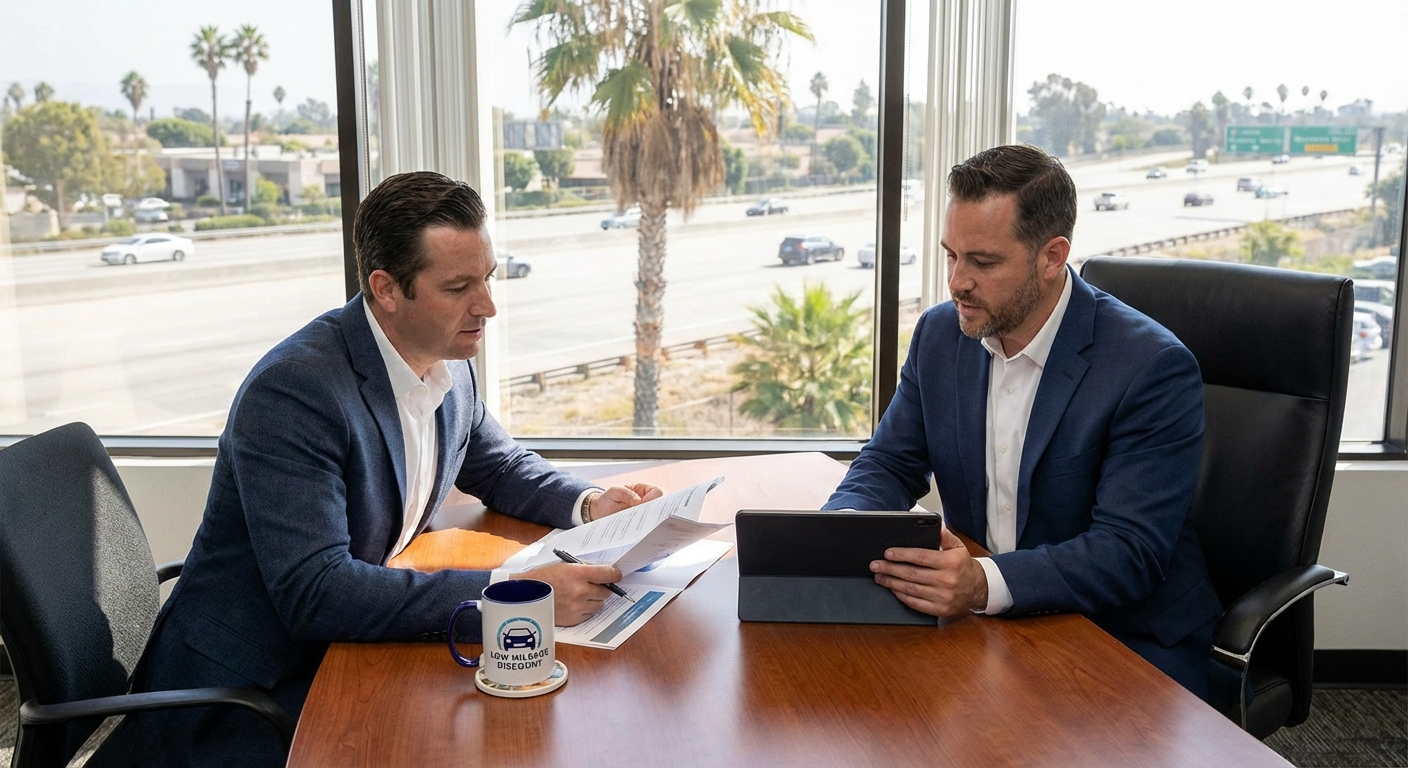
The short answer is: anyone who doesn’t drive much. The real answer is more complicated, because “not much” can mean different things to different insurers. Generally, we’re talking about drivers who log fewer than 7,500 to 10,000 miles per year. Some insurers might even offer deeper discounts for those who drive less than 5,000 miles.
Consider folks like Maria and David. Retirees are prime candidates. They often don’t have a daily commute and tend to drive only for errands, appointments, or leisure. Then there are the growing ranks of remote workers, especially in tech hubs or creative industries where a physical office is becoming a relic of the past. If your office is your dining room table in the Inland Empire, you’re probably not putting many miles on your car during the week.
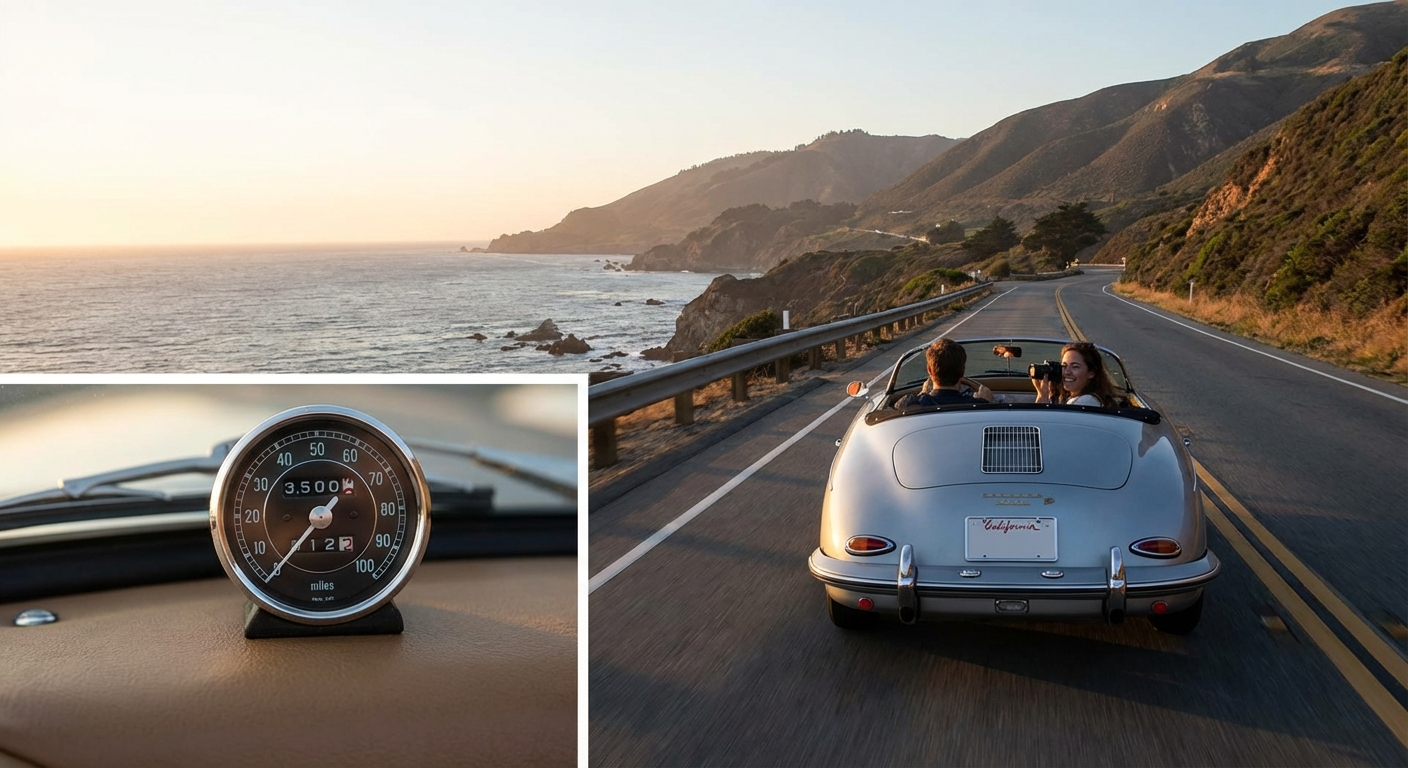
What about families with multiple cars? Maybe one car is the daily workhorse, but the other is a weekend cruiser or a classic car that only comes out for special occasions. That second car could absolutely qualify. Even people who rely heavily on public transportation – BART in the Bay Area, the Metro in LA – could see savings, using their car only when absolutely necessary.
How Do Insurers Actually Track Your Mileage?
This is where it can get a little personal for some people. There are a few ways insurers figure out how far you’re driving.
The simplest method is just asking you. When you get a quote or renew your policy, you’ll be asked to estimate your annual mileage. Sometimes, they’ll ask for an odometer reading at the start of your policy and then again at renewal to verify. This relies heavily on honesty, of course.
But here’s the thing. Many major insurers – State Farm, AAA, Farmers, and others – are increasingly leaning into telematics, also known as usage-based insurance (UBI). This means they want to *know* how you drive, not just how much. They might offer a small device that plugs into your car’s diagnostic port, or an app you download to your smartphone. These devices or apps track your mileage, yes, but often much more: your speed, braking habits, time of day you drive, even how quickly you accelerate.
For some, that’s a bit too much data sharing. They worry about privacy. And that’s a completely valid concern. But for others, the potential savings outweigh the privacy trade-off. It’s a personal choice, and it’s always good to understand exactly what data is being collected and how it’s being used before you opt in. Some programs offer an initial discount just for signing up, and then adjust it based on your driving behavior. Others are strictly mileage-based, offering a discount if you stay under a certain threshold.
Finding the Right Discount in the Golden State
So, how do you make sure you’re getting the best deal? It’s not always as simple as checking a box online. The California insurance market is a beast right now. Wildfires, rising repair costs, and a generally tougher regulatory environment have made finding good coverage at a fair price more challenging than ever. Many carriers have tightened their underwriting rules, and some have even pulled back from certain areas or stopped writing new policies altogether. This means you can’t just assume your current insurer is giving you the best low mileage discount, or even offering one at all.
This is where a good, independent insurance agent becomes invaluable. They work with multiple carriers, not just one, and they know the ins and outs of California’s specific rules and discounts. They can compare different policies, explain the nuances of telematics programs, and help you find an insurer that truly rewards your low mileage habits.
Someone like Karl Susman, with Los Angeles Car Insurance Quotes (CA License #OB75129), has seen it all. He understands the complexities of the market, whether you’re driving less in the bustling streets of Los Angeles, the quieter communities of San Diego, or the sprawling suburbs of the Central Valley. He’s got the experience to help you find those specific discounts that apply to your situation. If you’re tired of paying too much, it’s worth a conversation.
Ready to see how much you could save? Don’t leave money on the table. Start comparing your options today. Get a personalized quote at https://losangelescarinsurancequotes.com/quote/.
Keeping Your Savings Locked In
Once you snag that low mileage discount, you’ll want to make sure you keep it. Most insurers will want regular updates on your mileage. This could mean submitting odometer readings annually, or keeping that telematics device plugged in. If your driving habits change – say, you get a new job with a longer commute, or you suddenly start taking more road trips – you’ll need to update your insurer. Being honest is always the best policy. Misrepresenting your mileage could lead to your claim being denied if you’re in an accident, or your policy being canceled. Big difference.
Think of it as an ongoing relationship with your insurer. They’re betting you’ll drive less, and you’re getting a better rate for it. It’s a win-win, as long as everyone plays by the rules. What’s more, checking in periodically with an agent, especially if your life circumstances shift, ensures you’re always getting the best possible rate. Maybe a new insurer has entered the California market with an even better low-mileage program. Or perhaps your current insurer has updated their discount structure. Things change.
Finding those savings might feel like a treasure hunt in California’s complex insurance world, but for many, especially those driving less, it’s a hunt worth pursuing. You might be surprised just how much extra cash you could have for that next weekend getaway to Big Sur or a nice dinner in San Francisco.
Want to explore your low mileage discount possibilities? It takes just a few minutes. Find out if you qualify for lower rates by visiting https://losangelescarinsurancequotes.com/quote/. Or, if you prefer to talk to an actual human who knows the ropes, call Karl Susman at Los Angeles Car Insurance Quotes, CA License #OB75129, at (877) 411-5200.
Frequently Asked Questions About California Low Mileage Discounts
- What’s considered “low mileage” for auto insurance in California?
Generally, insurers in California consider low mileage to be less than 7,500 to 10,000 miles per year. Some carriers might offer deeper discounts for even lower annual mileage, like under 5,000 miles. It really depends on the specific insurance company and their particular programs.
- Do all auto insurance companies offer low mileage discounts?
Not always. While mileage is a primary rating factor under Prop 103, the *amount* of the discount and how it’s applied can vary significantly between insurers. Some companies might have specific telematics programs that offer larger savings, while others might just factor your estimated mileage into your base rate without a distinct “discount” line item.
- How do insurers verify my mileage in California?
There are a few common ways. Many companies will simply ask for your estimated annual mileage and sometimes request an odometer reading at the start and renewal of your policy. Increasingly, insurers are using telematics devices or smartphone apps that track your actual driving habits, including mileage, in real-time. This can be a more accurate, but for some, less private, method.
- Can I lose my low mileage discount if my driving habits change?
Yes, you can. If you suddenly start driving more miles than you initially reported or more than the threshold for your discount, your insurer will likely adjust your premium at your next renewal. It’s important to keep your insurer updated about significant changes in your driving habits to ensure your policy accurately reflects your risk.
- Is the low mileage discount worth the privacy trade-off with telematics programs?
That’s a personal decision. For some drivers, the potential savings from a telematics program are substantial enough to justify sharing their driving data. For others, privacy concerns outweigh the financial benefits. It’s always best to understand exactly what data an insurer’s telematics program collects and how it’s used before you opt in.
This article is for informational purposes only and does not constitute financial advice.