The Aftermath: What to Do After a Crash on a California Road
No one ever *wants* to think about getting into a car accident. It’s a jarring, often terrifying experience. One minute you’re driving along the Pacific Coast Highway, maybe enjoying the view near Malibu, or perhaps stuck in the familiar gridlock of the 405 near the Sepulveda Pass. The next, there’s a sickening crunch of metal, a jolt, and suddenly, everything changes. Your heart pounds. You’re shaking. What now? The last thing you need in that moment is to wonder how to even begin dealing with your car insurance.
You’re not alone in feeling overwhelmed. Many Californians tell me they feel completely lost after a fender bender, let alone a serious collision. It’s a confusing process, full of jargon and steps you’ve probably never had to think about. But taking a breath and understanding the claims process can make a world of difference.
First Steps at the Scene: Beyond the “Oops”
Your safety, and the safety of anyone else involved, always comes first. Pull over to a safe spot if you can. Turn on your hazard lights. If someone’s hurt, call 911 immediately. Don’t worry about insurance paperwork right then. People matter more than property.
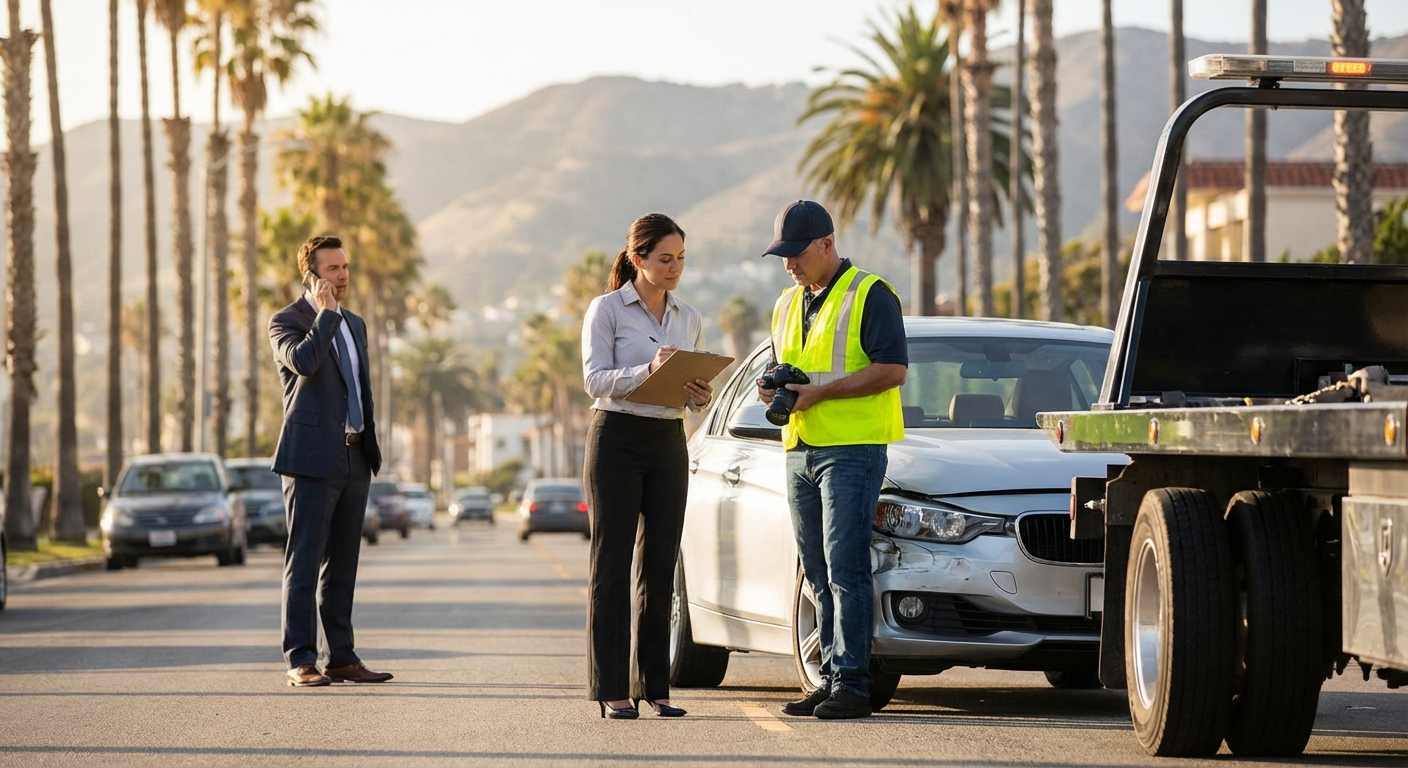
Once you’re sure everyone’s okay, and if it’s safe to do so, start gathering information. Grab your phone. Take pictures of everything: the damage to both cars, the license plates, the street signs, even skid marks on the pavement. The more photos, the better. Get the other driver’s name, phone number, license plate, and insurance information. Don’t forget to write down the make, model, and year of their car. If there are witnesses, politely ask for their contact info too.
Should you call the police? For minor bumps in a parking lot, maybe not. But if there’s significant damage, injuries, or if the other driver seems uncooperative, absolutely call them. A police report can be incredibly helpful later, especially if there’s a dispute over who was at fault. Remember, in California, you generally have to report an accident to the DMV within 10 days if there was an injury or death, or if property damage exceeded $1,000. It’s called an SR-1 form, and it’s not something you want to forget.

Telling Your Insurer: The Initial Call
Okay, the immediate chaos has subsided. You’re home, maybe still a bit shaky. Now what? It’s time to call your insurance company. Do it as soon as you can. Don’t delay. Most policies require you to report an accident promptly. Even if you’re not sure you’ll file a claim, it’s a good idea to let them know.
When you call, they’ll ask for all the details you just collected: date, time, location, other driver’s info, a description of what happened. Be honest and factual. Don’t admit fault, even if you think you might be. Stick to the facts. Let the adjusters figure out liability.
What happens next can feel a bit like waiting for a shoe to drop. Your insurer will assign a claims adjuster. This person is your main point of contact. They’ll review the details, look at your policy, and start the process of assessing the damage and determining who’s responsible.
The Adjuster and the Damage Estimate
Here’s where the real work begins. The adjuster will want to see your car. They might ask you to take it to a specific shop for an estimate, or they might send an appraiser to wherever your car is. Sometimes, with minor damage, they might even let you submit photos through an app for a quick estimate.
You’ll get an estimate for repairs. This estimate outlines the cost to fix your car. It’s often broken down by parts, labor, and paint. Don’t just accept the first number you see if it doesn’t feel right. You have the right to get an estimate from a repair shop of your choosing. It’s your car, after all. If your chosen shop’s estimate is higher than your insurer’s, the adjuster should work with the shop to reach an agreed-upon cost. They usually do.
Remember your deductible here. That’s the amount you agreed to pay out of pocket before your insurance kicks in. If your deductible is $500, for instance, and the repairs cost $2,000, your insurer will pay $1,500, and you’ll pay $500 to the repair shop.
When the Other Driver is at Fault (or Uninsured)
This is where things can get a little tricky, especially here in California. If the other driver was at fault, their insurance *should* pay for your damages, medical bills, and even things like a rental car. But here’s the thing: their insurance company works for *them*, not for you. They might try to minimize their payout.
You might hear from their adjuster, who might try to get a recorded statement from you. Be cautious. You don’t have to give them one. It’s often best to let your own insurance company handle communication with the other party’s insurer. Your agent, or even a personal injury attorney if there were injuries, can be a valuable ally here.
What if the other driver doesn’t have insurance? It’s a real problem in California. Despite laws requiring it, too many drivers on our roads — from the crowded streets of Downtown LA to the sprawling freeways of the Inland Empire — are uninsured. This is precisely why Uninsured Motorist (UM) coverage is so incredibly important in your own policy. If you have UM, your own insurer will step in to cover your damages and medical bills, just as if the at-fault driver had insurance. It’s a lifesaver.
California’s Unique Rules: Prop 103 and Your Rights
California has some pretty strong consumer protections when it comes to insurance. Proposition 103, passed way back in 1988, gives the state’s Department of Insurance (CDI) the power to approve or reject rate changes and protects consumers in several ways. It means your insurer can’t just raise your rates arbitrarily after an accident, especially if you weren’t at fault. Your rates can go up, sure, but there are rules. If you’re deemed a “Good Driver” — meaning you’ve been licensed for 3 years, have no more than one point on your record, and haven’t caused an accident that resulted in injury or death — you’re entitled to at least a 20% discount.
If you ever feel like your insurer isn’t playing fair, or if they’re dragging their feet, you have recourse. The California Department of Insurance (CDI) acts as a watchdog. You can file a complaint with them, and they’ll investigate. It’s a powerful tool for consumers who feel stuck.
The Settlement and Moving On
Once the damage is assessed, liability is determined, and repair costs are agreed upon, your insurer will issue payment. This usually goes directly to the repair shop, minus your deductible. If your car is totaled — meaning the cost to repair it exceeds its actual cash value — your insurer will pay you the market value of the car, again minus your deductible. This can be a tough pill to swallow, especially if you had an emotional attachment to your vehicle.
Sometimes, disagreements happen. Maybe you think the settlement offer for a totaled car is too low. Maybe you’re having trouble with a repair shop. This is where having an experienced insurance agent can make a big difference. They know the ins and outs. They can advocate for you, explain your policy in plain English, and help you understand your rights.
Here’s where it gets interesting. Many people just pick the cheapest policy they can find, thinking all insurance is the same. That’s not the whole story. The quality of your policy, the coverage limits you chose, and the helpfulness of your agent really show their worth when you actually *need* to file a claim. You don’t want to find out you’re underinsured after the fact.
If you’re ever in doubt about what your policy covers, or if you just want to make sure you’re properly protected before an accident even happens, reach out. Karl Susman at Los Angeles Car Insurance Quotes, CA License #OB75129, has helped countless Californians understand their coverage and navigate the claims process. You can call him at (877) 411-5200. He’s an expert, and he can help clarify things before you’re in a stressful situation. Or, if you’re ready to explore options and get peace of mind, you can get a quote right now: Get a California Car Insurance Quote.
What if There Are Injuries?
That’s a whole different ballgame. If you or anyone in your car was injured, your medical bills can pile up fast, especially with hospital costs in places like Orange County or the Bay Area. Your Personal Injury Protection (PIP) or Medical Payments (MedPay) coverage, if you have it, will kick in first. If the other driver was at fault, their Bodily Injury Liability coverage should cover your remaining medical expenses, lost wages, and pain and suffering. But wait — sometimes their limits aren’t enough, or their insurer fights you. This is another scenario where your own Uninsured/Underinsured Motorist Bodily Injury (UMBI) coverage becomes absolutely essential. It protects you when the at-fault driver’s insurance isn’t enough.
For serious injuries, it’s almost always a good idea to consult with a personal injury attorney. They can help you understand your legal rights and deal with the insurance companies, who often try to settle for less than you deserve.
FAQ About California Car Insurance Claims
Q: Will my rates go up if I file a claim?
A: Not always. If you weren’t at fault, especially in California, your rates shouldn’t automatically jump. However, if you were found to be at fault, or if you’ve had multiple claims, your insurer might increase your premium at renewal time. It really depends on your specific situation and your policy’s terms.
Q: How long does a car insurance claim usually take in California?
A: It varies wildly. A simple fender bender with no injuries might be resolved in a couple of weeks. A complex claim involving multiple vehicles, injuries, or disputes over fault could drag on for months, or even longer. Your insurer is generally required to investigate and respond promptly, but “promptly” can be subjective.
Q: What if I disagree with the adjuster’s estimate for repairs?
A: You have the right to get your own estimate from a licensed repair shop. If your chosen shop’s estimate is higher, your adjuster should work with them to come to an agreement. Don’t feel pressured to accept an estimate that doesn’t seem fair or complete.
Q: Do I have to use my insurance company’s preferred repair shop?
A: No. In California, you absolutely have the right to choose your own repair shop. While your insurer might recommend certain shops, you’re not obligated to use them. Pick a shop you trust, with good reviews and certified technicians.
Q: My car was totaled. How do they determine its value?
A: Insurers typically use several factors to determine your car’s actual cash value (ACV). This includes the make, model, year, mileage, condition before the accident, and recent sales of similar vehicles in your area. They use databases and market research to come up with a fair market value. If you disagree, you can present evidence of higher values, like comparable listings or appraisals.
Peace of Mind on the Golden State’s Roads
Dealing with a car insurance claim after an accident is never fun. It’s stressful, it’s confusing, and it can feel like a battle. But understanding the process, knowing your rights as a California driver, and having a knowledgeable advocate in your corner can make it a lot less daunting. Don’t face it alone. Whether you’re looking for guidance after a crash or simply want to make sure your current coverage is up to snuff, Karl Susman and the team at Los Angeles Car Insurance Quotes are here to help. You can call them at (877) 411-5200 for a clear, empathetic conversation about your situation. Or, if you’re curious about better coverage options for your specific needs, get a quote today: Get Your California Car Insurance Quote. Knowing you’re prepared for the unexpected is truly the best kind of peace of mind.
This article is for informational purposes only and does not constitute financial advice.