That Brand-New Car Smell Fades Fast – And So Does Its Value
You finally did it. You drove that sleek new sedan, maybe a shiny electric SUV, right off a dealership lot in Orange County or the San Fernando Valley. The sun glinting off the paint, the new car smell filling the cabin – it’s a great feeling. You’ve got the keys, the financing is all set, and you’re ready for California adventures. But here’s something most people don’t think about much after that initial thrill: the moment those tires hit the street, your car’s value starts dropping. Fast.
This isn’t some secret. Everyone knows cars lose value. But few truly grasp just how much, or what that means if something really bad happens to your new ride. Picture this: you paid $45,000 for that car. Six months later, it’s worth maybe $38,000. It’s a fact of life for new vehicles, and it’s a difference that can leave you in a real bind if your car ends up totaled.
The Big Problem: Depreciation and Your Loan
It boils down to a simple math problem that can have some really painful consequences. Say you borrowed $45,000 to buy that car. You’ve been making your payments diligently for a year. You still owe, let’s say, $40,000 on the loan. Now imagine you’re driving down the 405 freeway, maybe heading to a Dodgers game, and *bam!* – an accident. Not your fault, but your car is a complete write-off. Totaled. Gone.
Your standard auto insurance policy, even if you have full coverage with collision and comprehensive, will pay out what the car was worth *at the time of the accident*. That’s its actual cash value, or ACV. It doesn’t care what you owe the bank. So, if your car’s ACV is $35,000, your insurance company writes you a check for $35,000.
Here’s where it gets interesting. You still owe $40,000 on your loan. Your insurance company paid out $35,000. That leaves you on the hook for a $5,000 difference – a gap – on a car you no longer even own. You’re paying for a ghost car. That’s a tough pill to swallow, especially when you’re already dealing with the hassle of an accident.
What Gap Coverage Actually Does
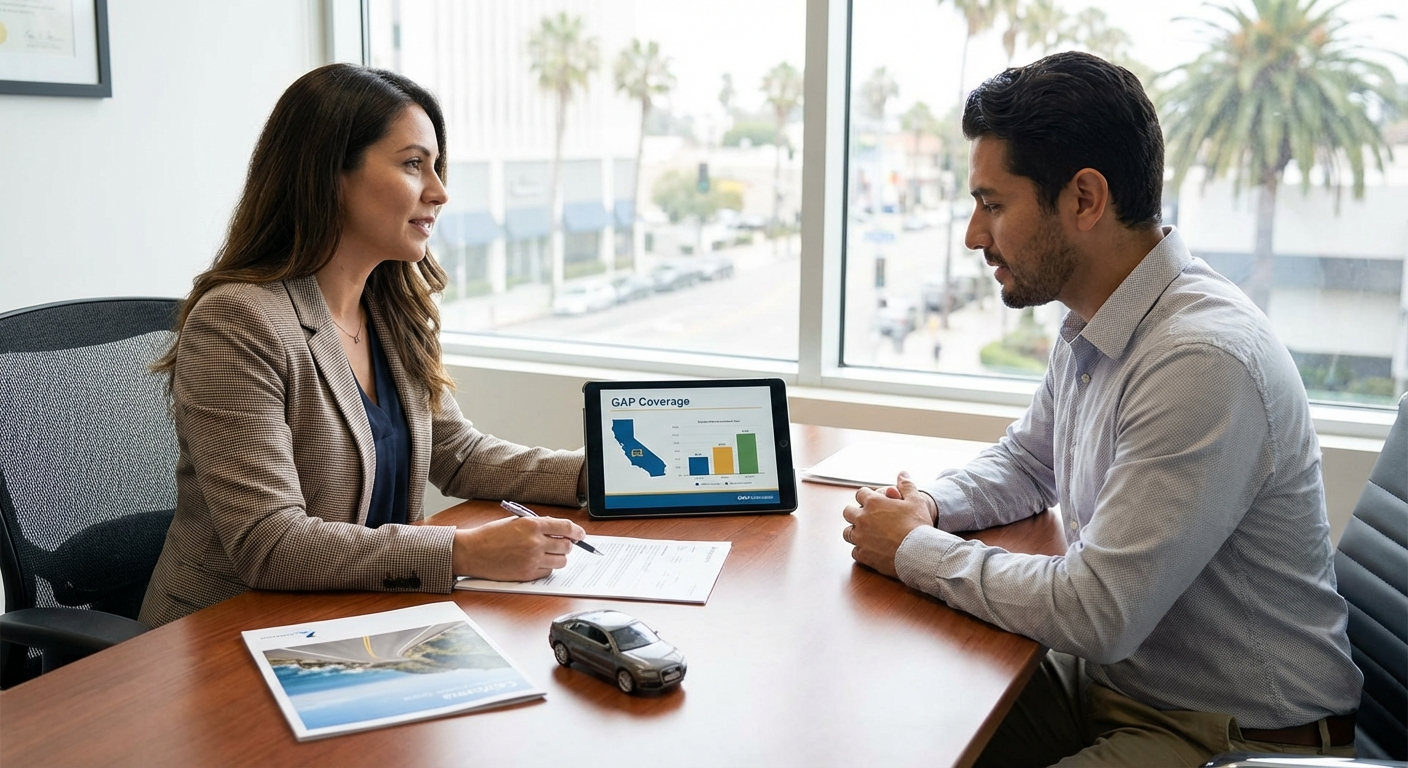
This is exactly what gap coverage is for. It’s an add-on to your regular auto insurance policy that steps in to cover that difference between what your car is worth (its actual cash value) and what you still owe on your loan or lease. It literally closes the “gap.”
Think of it as a safety net for your wallet. If your car gets totaled – whether it’s from a collision on a busy street in downtown Sacramento, a flood in a parking garage during a heavy winter storm, or even theft that results in a total loss – gap coverage makes sure you’re not stuck with a bill for a car that’s no longer yours. It pays that remaining balance directly to your lender, clearing your name and letting you move on without that extra debt hanging over your head.
Who Really Needs This Protection?
Not everyone needs gap coverage, but for a lot of Californians, it makes a ton of sense.
* **You bought a brand-new car:** New cars depreciate the fastest. If you financed or leased a new vehicle, especially with a small down payment or a long loan term (like 60 or 72 months), you’re almost certainly “upside down” on your loan for a while. That means you owe more than the car is worth.
* **You have a long loan term:** The longer you stretch out your payments, the slower you build equity in the car. This keeps you in that “upside down” position longer, increasing your risk.
* **You made a small down payment (or no down payment):** A smaller down payment means you’re financing more of the car’s initial cost, again, making it easier to owe more than it’s worth right from the start.
* **You leased your vehicle:** Most lease agreements actually require gap coverage. It’s often built into the lease payment, but it’s always smart to double-check those papers. If it’s not included, you absolutely need to get it separately.
* **Your car depreciates quickly:** Some car models lose value faster than others. If you’re buying one of these, gap coverage becomes even more important.
Consider the cost of living here in California. Cars themselves are often pricier, and repairs can be expensive, too. A minor fender bender in Los Angeles could lead to extensive damage on a newer vehicle due to complex sensors and integrated technology, making a total loss more likely than you might think.
How California’s Insurance World Plays a Part
California’s insurance market is, well, unique. We’ve got massive traffic, a huge population, and a regulatory system shaped by things like Prop 103. This means that while the core concept of gap coverage is universal, the rates and availability can vary between insurers operating in the Golden State. Some carriers might bundle it differently, or have specific rules about how long you can carry it.
For instance, premiums across the state have seen shifts. While not directly about gap coverage, the overall rising cost of auto repairs and higher accident frequency in dense areas like the Bay Area or the Inland Empire mean that when a car *is* totaled, the payout value might be lower than you expect, widening that potential gap. Getting advice from someone who understands the California market is a good idea. Someone like Karl Susman at Los Angeles Car Insurance Quotes, CA License #OB75129, has seen it all and can help you figure out what makes sense for your situation.
But Wait — Is It Really Worth the Extra Cost?
You might be thinking, “Another insurance add-on? Do I really need this?” Honestly, that’s a fair question. The short answer is yes, if you fall into one of those categories we just talked about. The real answer is more complicated and depends on your personal financial comfort level.
What’s the cost of peace of mind? If you had to suddenly come up with thousands of dollars to pay off a totaled car you can’t even drive, how would that impact your budget? For a relatively small additional premium each month, gap coverage can prevent a massive financial headache. It’s an investment in not having to deal with that particular brand of stress.
Think about it this way: you insure your home in Ventura County against wildfires, even though you hope you’ll never need it. You have health insurance, hoping you stay healthy. Gap coverage is similar. It’s there for a worst-case scenario that, while rare, can be financially devastating if it happens.
Getting Your Gap Coverage Set Up
Adding gap coverage is usually pretty straightforward. You can often add it when you first buy your policy or when you purchase a new vehicle. Some dealerships offer their own version of gap waivers, but it’s almost always better to get it through your auto insurance provider. Why? Because the dealership’s version might be more expensive, or it might not cover everything your insurer’s product would. It also keeps all your coverage under one roof, which can simplify claims.
When you’re shopping for auto insurance, especially for a new or leased car, ask about gap coverage. It’s a simple question that can save you a lot of grief. Don’t assume it’s automatically included with “full coverage”—it’s not. It’s a specific endorsement you need to request.
Ready to see how affordable this protection can be? Getting a quote is easy, and it gives you a clear picture of your options. Karl Susman and the team at Los Angeles Car Insurance Quotes can walk you through the specifics for your California car. You can start the process right now by visiting https://losangelescarinsurancequotes.com/quote/.
Understanding your insurance options in California can feel like a puzzle sometimes, but it doesn’t have to be. Getting clear, honest answers from a local expert makes all the difference. Karl Susman, CA License #OB75129, has helped countless Californians secure the right coverage. If you have questions about gap coverage or any other aspect of your auto policy, don’t hesitate to reach out.
Frequently Asked Questions About Gap Coverage
Can I get gap coverage for a used car?
Generally, gap coverage is meant for new cars or cars that are only a few years old. The reason is that used cars have already gone through their steepest depreciation curve. It’s less common to be “upside down” on a used car loan unless you’ve financed it for a very long term or put very little down. Some insurers might offer it for newer used models, but you’ll want to confirm with your agent.
Is gap coverage the same as new car replacement coverage?
No, they’re different. Gap coverage pays the difference between your car’s actual cash value and your loan/lease balance. New car replacement coverage, on the other hand, would pay to replace your totaled new car with a brand-new one of the same make and model, without regard to your loan balance. They both help in a total loss, but in different ways.
How long do I need gap coverage?
You need gap coverage as long as you owe more on your car loan or lease than the car is worth. For many people, this is typically the first few years of ownership. Once your loan balance drops below the car’s market value, you can usually drop the coverage, as the “gap” no longer exists. Your agent can help you figure out when that point might be.
What if my car is stolen and not recovered? Does gap coverage help?
Yes, if your car is stolen and declared a total loss (meaning it’s not recovered, or recovered but too damaged to repair), gap coverage will kick in. Your comprehensive coverage would handle the initial actual cash value payout, and then gap coverage would cover any remaining balance on your loan or lease.
Can I get gap coverage from my bank or credit union?
Some lenders offer a product similar to gap coverage, often called a “gap waiver” or “debt cancellation agreement.” While these can serve the same purpose, it’s often more cost-effective and simpler to get gap coverage directly through your auto insurance provider. It’s always smart to compare the terms and costs before deciding.
***
Ready to explore your car insurance options, including gap coverage? Get a personalized quote today and protect your investment. Visit https://losangelescarinsurancequotes.com/quote/ to get started.
***
This article is for informational purposes only and does not constitute financial advice.