A Bump in the Road: Understanding Medical Payments Coverage in California
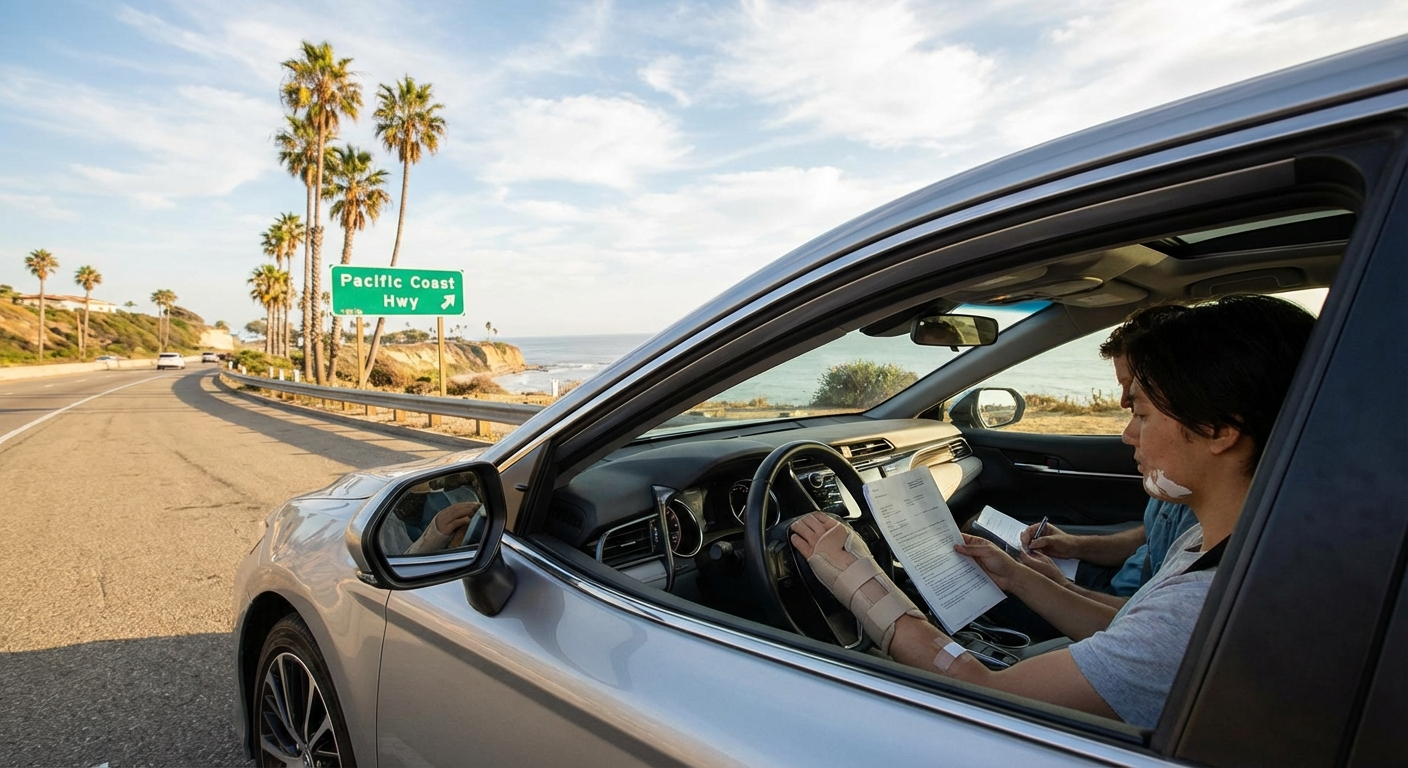
The afternoon sun was just starting its slow slide over the Santa Monica Mountains. Maria and her son, Leo, were heading home after a soccer game in the Valley, cruising down the 101. Leo was humming a tune from his headphones, Maria thinking about dinner. Suddenly, traffic ahead slammed to a halt. Maria hit her brakes, hard. The car behind her didn’t. *Wham.* Not a huge crash, but enough to jolt them both. Leo’s head snapped forward, then back. Maria felt a sharp pain in her neck.
No one went to the hospital in an ambulance. They exchanged information, called the police for a report, and drove home, shaken but seemingly okay. The next morning, though, Maria woke up with a stiff neck and a throbbing headache. Leo complained of shoulder pain. This kind of low-speed accident happens all the time in California, doesn’t it? From the crowded freeways of Orange County to the winding roads of Ventura, a minor fender bender can still leave you with unexpected medical bills. And that’s where something called Medical Payments coverage — or MedPay — often steps in, quietly doing a lot of heavy lifting.
What Exactly Is MedPay? Your Personal Health Safety Net
Think of MedPay as a small, dedicated health insurance policy that’s specifically tied to your car. It’s designed to cover immediate medical expenses for you and your passengers after a car accident, regardless of who was at fault. Yes, you read that right: *regardless of fault.* That’s a big distinction, especially in a “fault” state like California, where determining who caused the accident can become a drawn-out process.
For Maria and Leo, who were clearly not at fault, MedPay would have kicked in right away for their initial doctor visits, X-rays, and even physical therapy. It wouldn’t wait for the other driver’s insurance to accept responsibility. It wouldn’t even care if the other driver was uninsured, which happens more often than you’d think in the Inland Empire or out in the Central Valley. This coverage is about getting you and your loved ones care, fast.

How MedPay Works, No Matter Who Was Driving (Or Walking!)
MedPay isn’t just for occupants of your car. It’s surprisingly broad. If Maria had been walking Leo across a crosswalk in downtown Los Angeles and was hit by a car, her MedPay on *her* policy could still cover her medical bills, even though she wasn’t in her vehicle. It follows you. And it covers any family members living with you who are injured in an accident, whether they’re in your car, someone else’s car, or simply struck as pedestrians.
Here’s where it gets interesting. Let’s say Maria’s friend, Sarah, was driving her own car, and Maria was a passenger. If Sarah caused an accident, Maria’s MedPay on *Maria’s* policy would still cover her. It’s a personal benefit. It’s also often a primary payer. That means it can pay *before* your regular health insurance, or at least coordinate benefits to cover deductibles and copays your health insurance might leave you with. This can be a huge relief when you’re already stressed from an accident.
Most MedPay policies don’t have a deductible. You choose a limit — say, $5,000, $10,000, or even $25,000 — and that amount is available to cover medical bills up to that limit. For minor injuries like whiplash, strains, or bruises, that $5,000 can easily cover a few urgent care visits, follow-up appointments, and a course of physical therapy. Think about a trip to the ER, even for a quick check-up, that can easily run into thousands. That’s money out of your pocket, unless MedPay is there.
MedPay vs. Health Insurance: Why You Might Need Both
“But I have great health insurance,” you might say. “Why would I need MedPay?” That’s a fair question. The short answer is yes, your health insurance will likely cover accident-related injuries. The real answer is more complicated.
First, your health insurance has a deductible. It might be $500, $1,000, or even $5,000. It also has copays and coinsurance. Until you meet that deductible, you’re paying out of pocket. MedPay, as we just discussed, typically has no deductible. It starts paying from dollar one, up to its limit. That’s immediate cash flow for medical care when you need it most.
Second, health insurance might have limitations. Maybe it doesn’t cover chiropractic care, or certain types of physical therapy, or it requires specific referrals that take time. MedPay can be more flexible. It’s designed specifically for accident-related injuries, so it often covers a broader range of immediate care services without jumping through as many hoops.
Which brings up something most people miss. If you use your health insurance for an accident where another driver was at fault, your health insurance company might try to get reimbursed from the at-fault driver’s insurance — a process called subrogation. That’s their right. But it can complicate things for you down the line. Using your MedPay first can often simplify the process and keep your health insurance out of the fray for those initial, immediate costs.
Honestly, in a state like California, where healthcare costs just seem to keep climbing — premiums jumped a noticeable amount between 2022 and 2024 for many plans — having MedPay is a smart move. It’s an extra layer of protection, a way to buffer those initial financial shocks without dipping into savings or waiting for complex liability investigations.
Understanding the Limits: How Much is Enough?
So, how much MedPay should you carry? It’s not a one-size-fits-all answer. Most insurers like State Farm, AAA, and Farmers offer limits ranging from $1,000 up to $25,000 or even $50,000.
Consider your health insurance. What’s your deductible? What’s your out-of-pocket maximum? If you have a high-deductible plan, a higher MedPay limit — say $10,000 or $25,000 — could be a lifesaver. It could cover your entire deductible and then some, meaning you don’t pay a penny out of pocket for initial care. If your health insurance is really robust with a low deductible, you might opt for a lower MedPay limit, just to cover those initial copays and small bills.
Another thing to think about is how many people regularly ride in your car. Do you carpool? Do you have a big family? Remember, MedPay covers *your passengers* too. If you regularly have multiple people in your car, a higher limit offers more protection for everyone. A single person could go through $5,000 in medical bills pretty quickly after a moderate accident. Imagine three people in the car. That limit gets used up fast.
The Cost of Peace of Mind: MedPay’s Impact on Your Premium
You might be thinking, “This sounds expensive.” But here’s the thing: MedPay is generally one of the more affordable parts of your auto insurance policy. For a few extra dollars a month, you can often secure thousands of dollars in medical coverage. It’s a small premium for potentially huge peace of mind.
Of course, California’s insurance market has been a bit turbulent lately. We’ve seen some major insurers pull back or drastically increase rates in certain areas due to wildfire risks — like those we brace for every fire season, thinking about the 2025 LA fires — and general cost increases. Prop 103, passed way back in 1988, gives the state’s insurance commissioner power to approve rate changes, which is supposed to keep things fair. But even with that, premiums have definitely jumped for many drivers across the state.
However, MedPay’s relative cost-effectiveness hasn’t really changed. It remains a smart add-on that offers significant value for its price. It’s not the part of your policy that’s usually driving premiums sky-high. That’s more often tied to your liability limits, your vehicle’s value (for comprehensive and collision), and your driving record.
When Life Gets Messy: Why MedPay Matters
Let’s go back to Maria and Leo. Their minor accident wasn’t life-threatening, but the nagging pain was real. Maria ended up needing several weeks of physical therapy. Leo had a few chiropractic adjustments. Their health insurance had a $1,500 deductible, which they hadn’t met yet. But because Maria had a $10,000 MedPay limit on her policy, all their initial bills — about $3,000 total — were covered quickly. No arguments, no waiting for the other driver’s insurance to eventually pay up. They could focus on getting better.
That’s the real value. It removes a layer of stress when you’re already dealing with the aftermath of an accident. It’s there for those moments when you least expect them, whether you’re driving through a quiet neighborhood in Sacramento or navigating the dense traffic of San Diego.
If you’re unsure about your current MedPay limits, or if you even have it on your policy, it’s worth a conversation. Karl Susman at Los Angeles Car Insurance Quotes has been helping Californians understand their auto insurance options for years. He’s seen firsthand how MedPay can make a huge difference for families after an accident. You can reach out to him or his team. They’re licensed in California, CA License #OB75129.
It’s easy to overlook MedPay when you’re comparing quotes or just trying to get the cheapest policy. But a small investment here can save you a world of hurt — both physically and financially — down the road. Isn’t that what insurance is really about?
Ready to see how MedPay fits into your California auto insurance? Get a personalized quote and talk to an expert today: https://susmaninsurance.com/get-a-quote/
Frequently Asked Questions About California MedPay
Q: Does MedPay cover lost wages?
A: No, MedPay specifically covers medical expenses incurred due to an accident. It doesn’t cover lost wages, pain and suffering, or property damage. For those types of losses, you’d typically look to the at-fault driver’s bodily injury liability coverage, or your own uninsured motorist coverage if the other driver doesn’t have insurance.
Q: Can MedPay be used if I’m at fault for the accident?
A: Absolutely. That’s one of its biggest advantages. MedPay is a “no-fault” coverage, meaning it pays for your and your passengers’ medical bills regardless of who caused the accident. This is a huge benefit in California, where determining fault can take time.
Q: Is MedPay mandatory in California?
A: No, MedPay is optional coverage in California. However, many insurance professionals, like Karl Susman at Los Angeles Car Insurance Quotes, highly recommend it because of the immediate benefits and peace of mind it offers, especially given the rising costs of healthcare.
Q: What’s the difference between MedPay and Bodily Injury Liability?
A: Bodily Injury Liability (BIL) coverage pays for the medical expenses and other damages (like lost wages) of other people *you injure* in an accident where you are at fault. MedPay, on the other hand, pays for *your* medical expenses and the expenses of *your passengers*, regardless of who is at fault. They protect different groups of people in different scenarios.
Q: If I have Medicare or Medi-Cal, do I still need MedPay?
A: Even with government-funded health programs, MedPay can still be very useful. It can cover copays, deductibles, and services that Medicare or Medi-Cal might not fully cover, or might be slow to process. It can also act as a primary payer, helping to preserve your Medicare/Medi-Cal benefits for other health needs. It’s an extra layer of protection that many find valuable.
Want to review your current auto policy or get a new quote? Don’t wait until it’s too late. Connect with Karl Susman and the team at Los Angeles Car Insurance Quotes today: https://susmaninsurance.com/get-a-quote/
This article is for informational purposes only and does not constitute financial advice.